
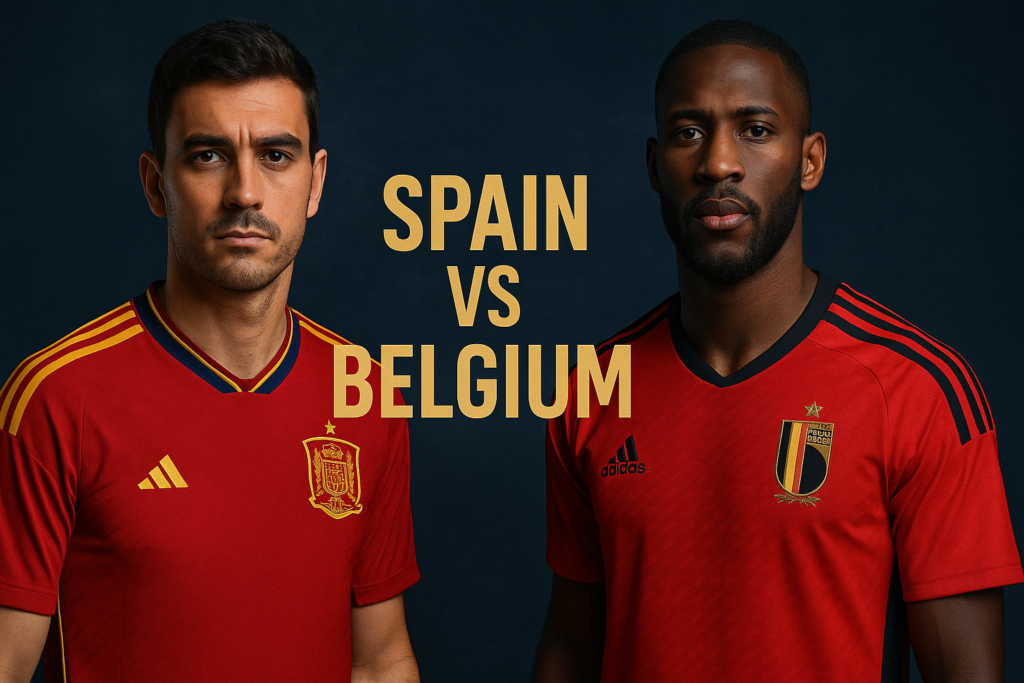
Spain vs Belgium — why most people expect a tight Spanish win in the 2026 World Cup quarters
Short version: For the Spain vs Belgium game, the smart money and the models lean Spain, and for once it's not just because they have more big-name players. This one looks like a neat little chess match where Spain’s defense and control of the ball probably decide things — and most prognosticators are penciling in a low-scoring Spain victory rather than a Belgian upset.
How we got here
The fixture is set for Inglewood, California, and it’s the kind of World Cup knockout pairing that will make neutral fans divide up their allegiances. ESPN's quarterfinal preview ran the numbers and notes that every predictor they cited picked Spain to move on, with scorelines ranging from 1-0 to 3-1.
That isn’t a lone voice. USA Today's panel leaned the same way — four of five picks went Spain — and the match previews that matter keep returning to the same themes: Spain’s defensive form, Belgium’s volatility, and a game state where Spain will probably try to own the ball.
Tactical preview: why the shape of the game favors Spain
There are two blunt ways to think about this: (1) Spain has been ridiculously hard to break down at this tournament and (2) Belgium can be brilliant or patchy — and a structured Spain can turn Belgium’s patches into dead time.
Spain’s defense — more than a hot streak
The defensive story is loud and measurable: Spain had kept five straight clean sheets heading into this round, a stat highlighted by Squawka's preview. When a team racks up that many shutouts in a World Cup, it isn’t always pretty football, but it is reliable football.
ESPN even described Spain’s back line as “lights-out,” pointing out how structure and individual quality have made them a difficult team to break in major moments. That matters in knockouts more than in group stages — the team that keeps its compactness tends to survive the chaos.
Belgium’s ceiling — dangerous but inconsistent
Belgium are the classic knockout dark horse: they showed they could switch on and beat the U.S., which ESPN flagged, but the general take is that their tournament has been up-and-down. USA Today called Belgium inconsistent, and that’s the rub — when Belgium hit their level they’re a matchup problem, but they haven’t been at that level every game.
So expect Belgium to look for quick vertical moments: fast transitions, direct runners, and set-piece danger. Spain’s job will be to prevent those moments from happening by controlling tempo and limiting turnovers in dangerous areas.
How Spain vs Belgium match will probably play out
Most previews think Spain will try to control possession and force Belgium into a reactive game. That’s not a guess — multiple outlets that modeled the game came to that same conclusion.
Consequence: this should be a low-event match. Spain grinds possession, Belgium tries to pounce. If Belgium can land the first big chance, it becomes a different contest. If Spain scores first, Belgium will have to open up and that plays into Spain’s control-based strengths.
Odds, models and what the market thinks
The market agrees with the experts, although the prices differ depending on the book and model.
- ESPN quoted DraftKings odds that had Spain around -340 and Belgium about +260 at the time of publication.
- Squawka referenced bet365 lines that were much closer — Spain -163, Belgium +425, draw +300 — and also used its model to give Spain a roughly 64% single-match win probability.
Numbers like those don’t guarantee anything, but they show where the collective expectation sits: Spain clearly favored, often by a single-goal margin in expert scorelines. The most common specific calls across previews were 1-0 or 2-0 Spain.
Responsible note: if you’re looking at markets, remember bookmakers move lines on volume and public money as much as on pure soccer logic. Keep wagers small and sensible if you play along.
Players and moments that will decide the Spain vs Belgium Game
Knockout matches boil down to a handful of duels and one or two key moments. Based on the reporting and previews, here’s what I’d watch for.
- Spain’s back line and who is asked to defend the channels. Their defenders have looked settled — that five-clean-sheet run didn’t happen by accident (Squawka).
- Midfield control. Spain’s ability to keep the ball away from Belgium’s dangerous transition moments is crucial. When they controlled Portugal late (and eventually won via a late goal), that game state was exactly what they want to recreate (see the late Mikel Merino winner reference in USA Today).
- Belgian moments of individual quality. Belgium can turn a game with a single piece of brilliance; ESPN noted their strong performance against the U.S. as proof they can raise their level.
- Set pieces and counters. In tight, low-scoring games, nailed set-piece defending and finishing will often swing things.
Scoreline scenarios I’m comfortable with for Spain vs Belgium
Putting on my slightly biased fan hat, here are three plausible outcomes that fit the public models and match narrative.
- Most likely — Spain 1-0 / 2-0: Spain controls possession, keeps Belgium quiet, and grinds out a one- or two-goal win. This mirrors the consensus in previews and models.
- Low-probability upset — Belgium 1-0: Belgium turns one transition into a goal and defends deep. It’s the classic counterpunch route and one reason people still back Belgium.
- More open shock — Spain 3-1: One of ESPN’s predictors listed a 3-1 Spain; this would happen if Spain gets a lead and Belgium opens up recklessly, creating chances for both sides.
Why the mainstream picks Spain in Spain vs Belgium? (and why you can still worry)
There are good, sourced reasons for the Spain lean:
- Real defensive form — five straight clean sheets is a headline you can’t ignore (Squawka).
- Model and market agreement — both predictive models and many bookmakers favor Spain.
- Recent momentum — Spain’s last-16 win came via a late, high-pressure moment, showing they can close games (USA Today on the Merino winner).
Why you shouldn’t write Belgium off:
- They can raise their level in a knockout match — ESPN noted how impressive they were against the U.S.
- Single moments decide tight games. One good Belgian sequence and the match flips.
- Football is noisy; form hangs on small margins. A bad bounce or an off day from a Spanish defender makes this far from a foregone conclusion.
FAQ — quick answers a fan actually wants
Who’s the favorite?
Spain. Models, bookmakers and most expert panels favor them — Squawka’s model gave Spain the largest single-match probability and ESPN’s previews and predictors leaned Spain across the board.
What scoreline should I expect?
Low-scoring Spain wins like 1-0 or 2-0 are the common calls across previews. Several outlets specifically listed 2-0 as one of the likeliest outcomes.
Are there any big injury or availability stories?
None of the previews or match pieces in the reporting I used had a reliable, source-backed injury update that changes the outlook. If that matters to you, watch the official team sheets just before kick-off.
Can Belgium actually win?
Yes. Experts say Belgium are inconsistent but capable of high-level performances, and ESPN highlighted their strong showing over the U.S. as evidence they can turn it on in knockouts.
How much do the betting markets favor Spain?
It varies by bookmaker. ESPN quoted DraftKings lines with Spain at -340 while Squawka cited bet365 odds closer to -163 for Spain. So bookmakers see Spain as favored, but the margin depends on where you look.
Any single stat that tells the story?
Spain’s five straight clean sheets is the headline stat people keep returning to — it’s a tidy way to sum up why they’re trusted defensively (Squawka).
Conclusion — the one thing to remember
Spain look like the safer pick because they’ve been hard to break and the models agree, but Belgium’s capacity for one brilliant game keeps this interesting. Expect a tight, possession-led Spanish win unless Belgium finds an early counter-attacking spark. In plain terms: back Spain if you want the probability, but don’t be surprised if one moment turns the whole thing on its head.
Bookmark William Hill to receive the latest predictions and sports news.