
Fullham vs Chelsea Premier League Prediction
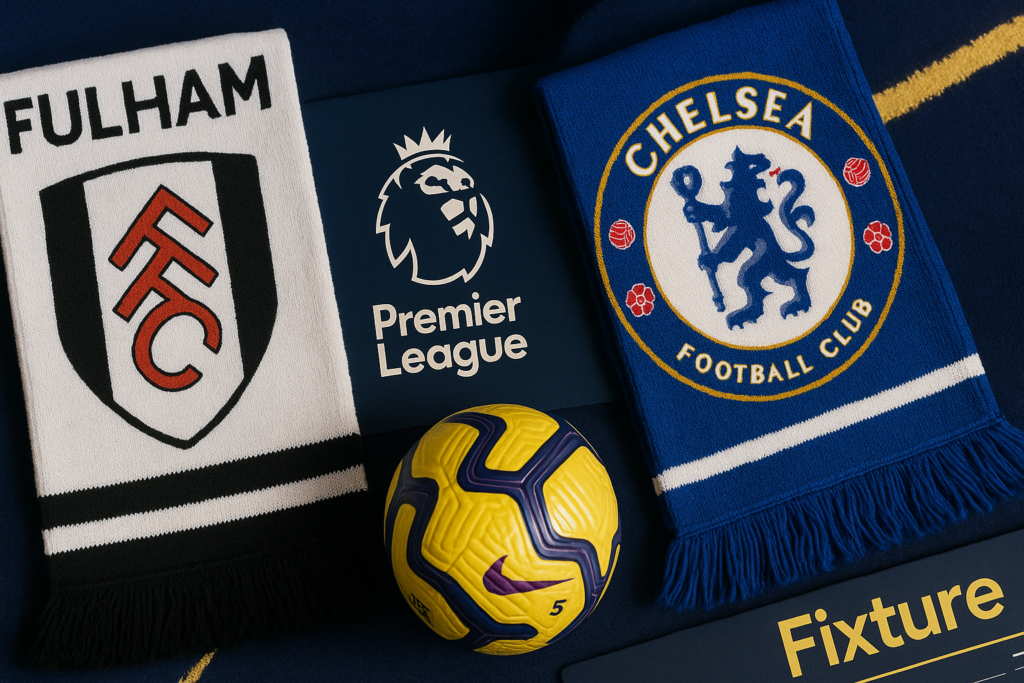
Fulham vs Chelsea — the short, friendly verdict (and why it’ll be nervy) Monday night. Craven Cottage. New season, new boss, the whole West London neighbourhood leaning one way or the other. Most of the sensible previews are settling on a tight, high‑scoring derby and — yes — a 2–1 Chelsea win. It feels right: Chelsea have the firepower, Fulham have the cottage chaos. Expect late heartburn, not a stroll. The short version: what the market thinks If you want one line to tell your mate before kickoff: Chelsea are slight favourites and most models pick them to win by a single goal. That’s the recurring headline across previews and tipsters. This match is set for Monday 24 August 2026 at Craven Cottage, and previews are almost unanimous that it’ll be close. Data sites back that up. One predictive model puts Chelsea around a 54.5% win chance, with Fulham and the draw sharing the rest — hardly a runaway. Other models list the likeliest exact scores as 1–1, 1–2 or 0–1, which again screams “tight but open.” So yes: Chelsea to nick it. But expect goals both ways and a nervy finish. Why most people tip Chelsea Xabi Alonso’s first big test This isn’t just any away game for Chelsea — for many it’s the first real look at Xabi Alonso’s project in match conditions. Previews frame it as Alonso’s “chance to make a statement” on the opening day, and pundits have been pointing to this as the moment to show the new ideas actually work on TV rather than in friendlies. Several write‑ups specifically tag the fixture as the start of the Alonso era. There’s also the simple resource argument. Chelsea’s summer business — including a British‑record signing mentioned in previews — has upgraded their attacking options and given them depth that Fulham arguably can’t match over 90 minutes. That extra quality is why tipsters keep writing “Chelsea will edge it.” One preview even highlights a £117m signing as evidence Chelsea have more firepower. Stats and models backing the visitors Predictive models are comfortable with Chelsea. One puts Chelsea’s win probability in the low‑to mid‑50s and flags Over 2.5 goals as likely. That combination — visitors slightly ahead and a decent chance of goals — is exactly why a 2–1 Chelsea scoreline keeps coming up in previews. Some tipsters add nuance: Chelsea might still have defensive questions early in the season, but their attacking metrics suggest they’ll create more than Fulham can handle overall. That’s how you get “Chelsea win but both teams score” as the favourite outcome. Why Fulham are dangerous at home The Cottage is no place for complacency Never underestimate Craven Cottage. It’s a tight pitch, the fans are close, and Fulham have a habit of making life uncomfortable for big away teams early in the campaign. Several outlets flag Fulham’s home edge as the reason this won’t be a routine Chelsea performance. Sports Gambler, for instance, emphasises the home‑edge argument. There’s even a model that bucks the consensus and gives Fulham the lean — it rates Fulham’s win probability around 42% versus 30% for Chelsea. That’s not a big disparity, but it’s enough to say: don’t treat Chelsea as invulnerable here. PunditKings’ breakdown is an example of the slightly contrarian view. Value plays and the underdog case Because of the home factor, a couple of tipsters recommend backing Fulham on Asian handicap lines — Fulham +0.5 is a favourite pick for those who think Chelsea are “too short” in the market. If you want to be pragmatic rather than dramatic, that’s the sort of move that matches the cautious models. And yes, some long‑shot correct‑score predictions floating around are fun: 2–2 is suggested as a cheeky outcome that suits Fulham’s attacking intent and Chelsea’s early defensive rustiness. What the numbers say — models, odds and key probabilities Let’s be clear about the bookies and the models — they’re not all singing the same hymn, but the chorus is close. Dimers lists 1–1, 1–2 and 0–1 as the most likely scores and gives Chelsea roughly a mid‑50s chance to win while keeping BTTS and Over 2.5 rates up the list. Covers puts Chelsea’s moneyline around 53% and lists Over 2.5 goals in the high‑50s, which fits the “open game with goals” narrative. Bookmaker grids shown in previews typically have Chelsea sub‑2.0 on the moneyline, Fulham in the mid‑3s/low‑4s, and the draw in the mid‑3s. So read it like this: the market says Chelsea are favourites, but there’s a healthy probability of goals and a non‑negligible chance Fulham cause trouble. It’s not a safe punt; it’s a close, live game. Tactics and what we’ll probably see Expect an attacking first half. Multiple previews agree BTTS is likelier than a clean sheet for either side. The numbers back that up: BTTS probabilities and Over 2.5 projections are both sitting around the mid‑50s to low‑60s in models. Chelsea’s blueprint Alonso’s team will likely look to control the ball, move it into the wide areas, and add numbers late — the kind of pressing and orbital passing patterns his teams are known for. With new additions up front, Chelsea should create chances, even if defensive cohesion is still a work in progress. Fulham’s counter Fulham will try to make it messy. Expect energetic pressing from their forwards, quick transitions, and lots of bodies in the box when they attack. At home, they’ll back themselves to convert the half‑chances, and that’s why both teams scoring is a common prediction. Put together: a decent number of shots, moments of quality from Chelsea’s attack, and enough grit from Fulham to keep it interesting until the final whistle. Team news, selection questions and the “early season” wildcard We don’t yet have fully confirmed XIs in most previews. That matters. It’s Matchday 1 and managers commonly tinker — especially a new head coach like Alonso who may still be testing combinations. Multiple previews carry projected lineups rather than firm ones. Tipsters flag fitness doubts
Bayern Stuttgart Preview Key Angles and Open-Game Dynamics
Bayern vs Stuttgart: who to bet on (and how to think about it) Short version: if you want the conservative play, back Bayern. If you want a spicy, higher-return punt, Stuttgart is the kind of underdog that can sneak a result — and this matchup usually serves up goals, so mixes that include “over” are legit to consider too. Why Bayern look like the safe pick Because the last couple of years in this fixture haven’t been kind to Stuttgart. Bayern thoroughly handled them when it mattered: that 4-2 league win was the one that clinched the 2025/26 title, and then Bayern beat Stuttgart again 3-0 in the cup final, with Harry Kane grabbing a hat trick in the win, according to ESPN. Those aren’t fluky scorelines. Bayern finished the season much higher in the table: their club material notes they had 76 points after 29 matchdays, versus Stuttgart’s 56 in the same snapshot — that’s a useful snapshot of the gap in consistency last year (the club wrote that up around the time of the April meeting). Head-to-head history piles on, too. Independent H2H databases show Bayern winning most of these meetings: one site lists 32 wins in the previous 41 meetings, and FotMob’s tally is similarly lopsided, showing Bayern with the lion’s share of wins in the rivalry. Put simply: recent results, season-long form and the historic balance all tilt toward Bayern being the safer, lower-variance choice. Why Stuttgart are still dangerous — and tempting as an underdog Just because Bayern are favorites doesn’t mean the match is a guaranteed snooze. This rivalry has a history of open games and shock results. That 4-2 scoreline wasn’t the first time these fixtures went back-and-forth. When you want value, this is the sort of matchup where a savvy underdog play can pay off. Stuttgart will come in as the underdog and they’ve shown enough last season to suggest they’re not a team you can write off completely — the club materials even framed last season as two high-performing campaigns rather than a total mismatch. And stylistically, these games often leave the door open. If Bayern start fast and push numbers forward, Stuttgart can catch them on the break or nick something from set pieces. Those are the scenarios where an underdog bet with a little patience and small stakes can deliver value. Goals, goals, goals — the sensible sideways bet If there’s a bet that matches the storyline of these meetings, it’s one that leans on goals. Recent H2H data points to lively scorelines: AiScore shows Bayern’s last five matches in this sample averaged 4.0 goals per game, while Stuttgart’s last five averaged 2.4. That’s a neat nugget: even when Stuttgart are involved, the games with Bayern have trended toward being open contests. Combine that with Bayern’s recent 4-2 and 3-0 wins, and an “over goals” selection or a combo like “Bayern to win and over 2.5” makes sense as a middle-ground option between safe and sky-high risk. How that works in practice Bayern to win — lowest variance. Bayern and over 2.5 goals — still leans Bayern but pays better and fits the recent pattern. Stuttgart or double chance — higher payout, higher risk, use smaller stakes. What the market context (and the data) actually says Market context is useful to frame your expectation, but we don’t have live odds in this packet, so treat the following as directional, not prescriptive. Data sources line up behind Bayern as the expected victor and behind a pattern of open, high-scoring matches. For raw H2H totals, one summary site highlights Bayern’s dominance with 32 wins in a recent 41-game window; another shows a similarly dominant tally on FotMob. A separate head-to-head snapshot also points to high-goal games and an 80% Asian-handicap win rate for Bayern across a recent sample — that’s the sort of stat that tells you bookmakers and punters have often been comfortable moving to Bayern in these matchups. In short: the evidence pushes you to back Bayern for reliability, and to consider over-goals or a Bayern+over combo if you want improved value without leaping to a long-shot Stuttgart outright bet. How to size your stake depending on your appetite Here’s a simple, practical approach — no one-size-fits-all, but a useful rule-of-thumb: If you want safety: small to medium stake on Bayern to win. This is the “keep your bankroll intact” play. If you want value: medium stake on Bayern + over 2.5. You get a better price and you’re still backing the stronger side. If you want upside: tiny stake on Stuttgart (or a draw/lose double chance) — treat it like a speculative shot you expect to lose most of the time. And remember: if you’re combining bets, the variance stacks. If you put too much on a long-shot underdog, you’ll feel it when it doesn’t come off. Keep the unit sizes proportional to the likelihood implied by the data and by what you actually want from the bet (fun vs. profit). Quick checklist before you click confirm Have you checked the team news? Injuries and rotation change everything, and the sources here don’t include the final lineups. What’s the venue? Home advantage matters even between mismatched teams. Are you betting for fun or to grind value? That decision should guide bet size. Remember the recent results: Bayern 4-2 (league) and Bayern 3-0 (cup) — both point toward goals in the fixture. FAQ — what fans actually ask 1. Is Bayern a guaranteed win? No. Nothing is guaranteed in football. The evidence we have — recent head-to-heads, season snapshots and cup final results — points to Bayern as clear favorites, but upsets happen and Stuttgart have been dangerous in certain matchups. Treat Bayern as the safer bet, not a lock. 2. Are these games usually high-scoring? Yes, they often are. H2H data and recent scorelines show open games. AiScore’s head-to-head sample lists Bayern’s recent matches averaging 4.0 goals per game, and recent fixtures like the 4-2 and 3-0
Premier League 2026-27 Predictions

Premier League 2026-27: Who’s Got the Best Shot — and Who’s Walking the Tightrope? Short version: everyone’s talking Arsenal, Manchester City, Liverpool and Chelsea for the top end — and a handful of promoted teams look dangerously close to the cliff. The fun part is working out which of those elite clubs will crack under pressure and which relegation newbies will do a proper S-tier survival job. I’ll walk you through what the pundits and the markets are saying, which models disagree, the players people are buzzing about, and the bits we don’t actually know yet. The headline race — the usual suspects (but with a twist) Most of the previews and betting boards point to four clubs as the spine of the title conversation: Arsenal, Manchester City, Liverpool and Chelsea. That’s the framing ESPN uses when they set the early book for 2026-27, and it’s the sensible starting point if you care about realistic outcomes rather than wishful thinking. Arsenal have been the headline favorites in several markets — remember, being the favorite isn’t the same as being the favourite of every fan — but the betting prices have them near the top. The New York Post cited FanDuel odds putting Arsenal at +145, with City, Liverpool and Manchester United trailing behind at wider prices. That’s not a tiny gap; it’s a statement that bookmakers think Arsenal’s recent momentum might actually translate into silverware (or at least a very serious push). On the other hand, BetMGM still lists Manchester City up there as a winner pick, so nobody’s writing Pep’s side off. Those two camps — “Arsenal can keep climbing” and “City will reassert itself” — are the core narrative dueling all season. All of this matters because the Premier League is still both tight at the top and mercilessly punishing to anyone who slips. These four clubs give you the best balance of squad depth, tactical polish and Champions League experience — or they’re supposed to. Top four: the pressure points If the title feels crowded, the top four feels even more like a pressure cooker. ESPN’s piece and other previews treat Chelsea as the swing club in many forecasts — they’re the team most likely to flip this table, for better or worse. Why Chelsea? They’re often teetering between immense talent and inconsistent results. If that staff-to-player alignment clicks, Chelsea will push for Champions League spots. If it doesn’t, they fall into the “almost” trap that’s familiar to Blues fans. How pundits and models split the order ESPN centers the race on Arsenal, Chelsea, Liverpool and Manchester City as the core contenders. A predictive model discussed by GiveMeSport had Liverpool first, Arsenal second, City third, and Chelsea fourth — which shows how narrow the gap can be even between algorithmic forecasts and human opinion. So take your pick: bookies like Arsenal, some data models like Liverpool, and traditional wisdom keeps an eye on City. That uncertainty is where the season gets fun. Promoted teams and relegation storylines The other half of the soap opera is who’s walking the plank. A cluster of promoted sides — Hull City, Ipswich Town, Coventry City and Sunderland — are getting labeled as the likeliest to struggle in early-season markets. The New York Post notes Hull as the strongest relegation favorite, with a very short price in some books, and BetMGM has Hull pegged to finish bottom in their futures listings. That repeated name across different markets is telling; bookmakers aren’t simply pessimistic because a team is new, they’re pricing in squad depth, budget and the early fixtures that tend to knock promoted sides off balance. Meanwhile, The Independent’s preview singles out Ipswich to be the top promoted side at 11/8 in their tips. So the promoted group isn’t being lumped together — there’s nuance about who could surprise and who looks most likely to head straight back down. Why promoted teams are always interesting New clubs often come in with one very strong season’s form and then hit the reality of Premier League depth. Bookmakers and models price continuity, depth, and experience. That’s why the same names show up in relegation chatter. Get a couple of early shocks and the narrative changes overnight — survival becomes a confidence game as much as a points one. Which players people expect to matter There’s always a crowd around the familiar stars. Morning Footy’s season-preview chat mentions a few names pundits keep returning to: Florian Wirtz as a bright newcomer candidate and Erling Haaland tipped for the Golden Boot in some segments. That feels right: Wirtz has the sort of midfield creativity that can swing tight games, and Haaland still looks like the kind of striker who can turn 20-odd chances into enough goals to keep his team competitive even when everything else is going sideways. But a reminder here: player stories can flip fast because of injury or form, and the research available to us right now is more about broad predictions than detailed squad reports or fitness updates. What models and markets disagree on It’s worth being explicit about where consensus is thin. Different systems — human pundits, bookmakers, supercomputer models — each have their biases. Bookmakers incorporate money flows and liabilities; they’ll shorten a price if lots of punters pile on a favourite early. Human pundits bring context: managerial track record, transfer windows, locker-room vibes — a lot that models can’t measure easily. Algorithmic models, like the one featured on GiveMeSport, attempt to normalize everything into probabilities and sometimes give different orders because they weight variables differently. So when GiveMeSport’s model puts Liverpool first but FanDuel pricing favours Arsenal, you’re not seeing a contradiction so much as different priors and inputs. Both can be right in their own way — one forecasts expected outcomes over many simulated seasons, the other reflects the immediate market view. What we don’t know yet — and why that matters Probably the most important part of any preseason prediction is admitting its limits. The available
England vs Argentina | World Cup Semifnal Prediction
England vs Argentina: Messi’s first dance with the Three Lions — who’s got the ticket to the final? Two heavyweights, two extra‑time epics behind them, and a semi‑final in Atlanta that feels like a proper moment for both sides. This isn’t a friendly reunion at Wembley; it’s the World Cup, and the winner meets France or Spain for all the marbles. Everyone’s talking about Messi, Jude Bellingham and whether structure or magic will decide the night. The stage is set in an Atlanta semi-final, and yeah, you should be excited. Why this match actually matters On paper this is one of the tournament’s marquee matchups: defending champions Argentina against an England side that looks like it’s finally grown up under Thomas Tuchel. There’s history — long, messy, glorious history — and there’s a present packed with form and narratives that matter. If you like storylines: Lionel Messi has never played England at senior level. That’s wild, given everything he’s been through. The semi is literally his first proper international meeting with the Three Lions, which adds a cinematic edge to the contest. How both teams got here Neither walk into Atlanta fresh. Both needed extra time in the quarters, which tells you two things: they’ve got resilience, and there’s a fatigue factor to watch. England overturned Norway 2–1 after extra time in Miami, with Jude Bellingham scoring both goals to drag them through — a reminder that he is now England’s heartbeat in big games. The comeback was dramatic and earned, and it’s their fourth time ever reaching a World Cup semi‑final. Argentina beat Switzerland 3–1 after extra time in Kansas City. Alexis Mac Allister opened the scoring, but when Switzerland equalised Argentina were under pressure until Julián Álvarez and Lautaro Martínez turned it around in extra time. The defending champions still look dangerous when games go late. Those quarter‑finals are worth bookmarking: England’s momentum is baked around Bellingham’s late‑game impact, while Argentina keep finding ways to grind and then explode when it matters most. The tactical chess match Most previews describe this as a near‑50/50 game where small tactical nuances or moments of individual brilliance decide it. That’s a neat summary — but let’s unpack the key matchups. Messi versus Tuchel’s structure One obvious contrast is Argentina’s improvisational, Messi‑led creativity versus Tuchel’s organised, pressing and possession approach. Analysts peg this as a classic “inventive maestro against a modern system” showdown. Expect England to try and keep things compact and to set triggers for selective pressing, with a midfield shield aimed at stopping Messi from getting his feet between the lines. Messi, by the way, isn’t just a headline — he’s been lethal. He’s near the top of the scoring charts with eight goals in the tournament, and Argentina’s attacks habitually funnel through him. Bellingham and the midfield crunch If Tuchel has built England around one man, it’s Jude Bellingham. His brace against Norway was a reminder of his late‑arriving, late‑finishing threat; pundits expect him to be pivotal again. England’s control of central spaces — whether via Bellingham’s driving runs or positional rotations — could decide how often Argentina have to rely on individual moments to create. Argentina counter with a mix of ball‑winners and technicians, often led by Alexis Mac Allister, who links play and frees Messi to do damage. Whoever wins the central moments will likely dictate the game’s rhythm. Wide areas, transitions and counters Both sides can hurt each other on the break. England’s quick transitions and the link‑ups from Bellingham to wide forwards give them a chance to exploit space behind full‑backs. Argentina, conversely, are dangerous the instant they win possession: a quick ball to Messi or Álvarez in the channels can make an organised defence look suddenly exposed. So watch the full‑backs, and watch who wins the first turnovers. Those sequences often end up as the decisive plays in tight semis. What could swing the game With two evenly matched teams, the small stuff becomes massive. Here’s what I’d circle on a cheat sheet: Individual brilliance: Messi can invent a goal from nowhere; Bellingham can steal a match with late runs. One of those players might have to produce the moment. Set pieces: Tight games at this stage often turn on corners or free‑kicks. Whoever defends and attacks them better gains a big edge. Fatigue & fitness: Both teams played 120 minutes in the quarters. Analysts and previews talk about accumulated tiredness and small knocks. That could make intensity drop late — which favours the side better at managing heavy legs. Game management and substitutions: Tuchel’s decisions and Argentina’s options off the bench could be decisive. Sub‑bench impact is huge in matches that go to extra time. None of these are glamorous, but they’re the real levers. In a game described by video analysts as “extremely close”, the match will likely drift toward whoever handles these tiny margins better. History, headlines and the Messi factor This fixture carries proper World Cup baggage — 1966, 1986, 1998 — and the media love that. But the freshest, most extraordinary hook is that Messi has never faced England at senior international level before. That fact’s been splashed across previews as a rare, almost cinematic anomaly. Messi himself leaned into the moment, calling England a “powerhouse” and saying the semi will be “special”. That quote feeds the narrative that this is not just another knockout game; for Messi and many fans it’s a first‑time meeting that’s been built up for years. On top of that, the bracket keeps alive the Qatar‑era storyline: win and Argentina could meet France — and a potential Messi vs Mbappé rematch — if France get past Spain. The tournament’s scripting couldn’t be neater if it tried. What the experts are saying There’s no consensus. That’s the headline — the previews split, and the predictions are all close but different. One preview tips Argentina to win 2–1 after extra time, arguing slightly in favour of the champions’ pedigree and Messi’s form. Video analysts (the
France vs Spain Semifinals Prediction
France vs Spain — The Semi That Feels Like a Final Put the beers on ice: Tuesday’s France‑Spain World Cup semi isn’t just another knockout game. It’s a clash of styles, a little bit of revenge, and very likely a match where one superstar makes the difference. Most experts and markets have France as the narrow favorite, but “narrow” is the operative word — this one should be tight and entertaining. (Follow Match Schedules & Live Scores at William Hill) Match basics and why they matter This one kicks off at 3:00 PM ET on Tuesday, July 14, 2026, at the cavernous AT&T Stadium in the Dallas–Arlington area. Broadcast-wise in the U.S., FOX has the English feed, Telemundo the Spanish, and streaming is on Peacock and FOX One — handy if you’re moving between bars or sofa rooms. These logistics matter: a semi in a massive stadium in the middle of the day in the U.S. changes feel and atmosphere compared with a late‑night European kickoff. How each side got here Both teams arrived in North America as tournament favorites, which makes this match feel like a preview of the final many thought we’d get. France have picked their moments well; their quarterfinal was a 2–0 win over Morocco, repeating the scoreline from the 2022 semifinal and underlining how efficient they’ve become at knockout football. (Fox Sports has the context here.) Spain’s road has been less tidy. They scraped past Belgium 2–1 in the quarters after a goalkeeping mistake handed Miguel Marino the winner, and while they’ve moved on, some pundits openly say Spain “need to play a lot better” than they have been. That sense of unfinished business — talent on one hand, a bit of inconsistency on the other — hangs over them. Key players: the obvious and the under‑the‑radar Kylian Mbappé: the constant Everything about France funnels through Kylian Mbappé. He’s sitting on eight goals at this World Cup, and the way analysts talk about France’s threat is basically: stop him and you stand a chance. USA Today’s panel even imagines nights where he decides the game single‑handedly. You don’t need me to tell you he’s the headline; you need to plan for him. Spain’s creative core Spain will try to win this the old-fashioned way: control the ball and create chances. They’ve averaged close to two goals per game this tournament, so they’re not just hogging possession for the sake of it — they’ve been productive. Young Lamine Yamal is the livewire everyone mentions; his Euro 2024 display against France is now a reference point for what he can do if he finds space and confidence again. So the matchup boils down to a familiar script: Spain’s volume and craft versus France’s precision and one‑on‑one firepower. Tactics: possession vs. counterpunch If you want the short version: Spain will hold the ball, France will wait for the moments that hurt. That’s been the consensus from TV analysts and betting previews alike, and it fits what we’ve seen from both sides in this tournament. Spain’s profile: patient buildup, probing wide, a lot of passes to open up spaces. France’s profile: compact defense, quick transitions, Mbappé and co. looking to finish two or three clear chances rather than force thirty. CBS Sports’ betting analyst leans to Over 2.5 total goals, partly because Spain create chances and France are clinical. That’s worth keeping in mind: this won’t necessarily be a 0–0 chess match where possession equals control. France have enough cutting edge to make one or two moments count. What the markets and experts are saying Across odds and punditry, the tilt is toward France but only just. Betting data aggregated early shows France around −144 to advance (roughly a 59% implied chance) with Spain on the plus side. The 90‑minute moneylines put France slightly ahead in regulation probability, but models are much closer: Syracuse.com’s machine model gives France about a 40.3% chance to win in regulation, Spain 32.4%, draw 27.3% — essentially a coin with a slightly heavier silver edge. USA Today’s staff are mostly picking France with scorelines like 2–0, 2–1, or even 3–1. CBS Sports highlights both teams’ scoring form and leans toward a game with goals. ESPN FC pundits, meanwhile, remain a little split; some still put Spain on a trajectory to win the whole tournament. In plain terms: most people expect a tight, high‑quality game where France’s finishing is the X‑factor. But Spain are considered very much alive, and if they play to their best, they’ll win. Storylines that add spice (and make for good pub chat) Revenge angle: France lost the Euro 2024 semifinal to Spain, and French media and fans have been circling that result. USA Today even frames this as payback. That emotional edge matters; two years of simmering can become motivation on the day. Mbappé chases history: He’s on eight goals in this tournament and several commentators expect him to be the goalscorer who tilts this match. The simple narrative of “Mbappé decides it” is not lazy — it’s what the evidence suggests so far. Spain still have faith: Even after the jittery Belgium win, some high‑profile pundits keep Spain on a pedestal and expect them to flip the switches that matter. That belief itself can be a story — the confident underdogs who never doubted themselves. Styles clash: The match is a textbook possession‑vs‑counter battle. If you like tactical chess and quick pace shifts, this will be tasty. My prediction — the honest, mate‑at‑the‑bar take Okay, here’s where I land: France 2, Spain 1. Why that score? A few tidy reasons: France’s finishing has been ruthless in this tournament — they don’t need many chances and Mbappé is the sort of player who converts the one he gets (and often the rebound of one he doesn’t). Spain will control much of the ball and create chances, but pundits and models have pointed out they haven’t hit peak fluency yet. Their win over Belgium came through a mistake rather than
Argentina vs Switzerland Predictions – Tight Quarterfinal Clash
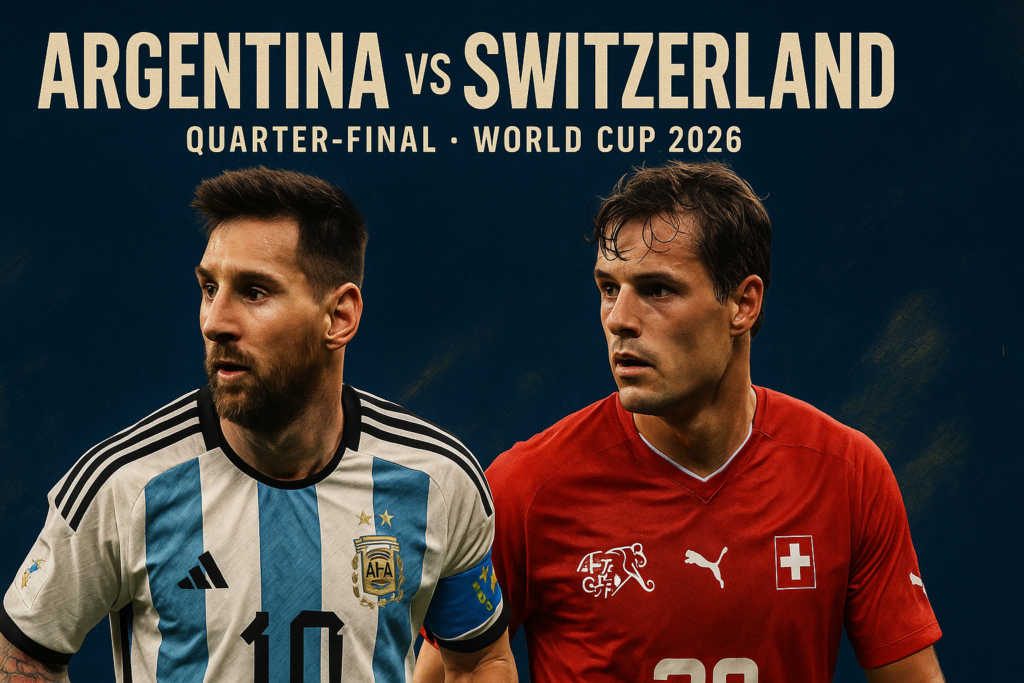
Argentina vs Switzerland — Quarterfinal Preview and Prediction Saturday in Kansas City feels like one of those World Cup nights where the script could go two ways: Argentina, with that familiar knockout aura around Lionel Messi, grinding out a narrow win — or Switzerland, a defensive unit that refuses to give anything away, somehow nicking a famous upset or dragging the game to penalties. Either outcome would be entirely believable right now. Why this game actually matters This isn’t a throwaway quarterfinal. The winner moves to the semis and is set to face whoever gets past England and Norway, so one more big result stands between a team and the final four. The fixture is scheduled for Saturday, July 11 at Arrowhead Stadium in Kansas City, which should be a proper atmosphere — loud, hot, and unforgiving. On paper the market’s with Argentina, but that’s not the whole story. Multiple previews and expert panels lean toward Argentina advancing, yet they rarely predict a comfortable thrashing; instead, it’s often a narrow win or something decided on spot-kicks. I’ll walk through why both of those reads make sense. How each side got here Argentina’s route into the quarters has been defined more by results than gorgeous play — the sort of campaign where the team finds ways to win even when they’re not flowing. ESPN’s panel kept coming back to one reason: Messi’s knockout-stage influence feels real and repeatable. They framed Argentina as a team that can win tight matches because they have that individual who can change the game in a moment. Switzerland, meanwhile, have leaned on structure. Several previews point out they’ve been one of the tournament’s steadiest defenses, which helps explain why experts consider them dangerous in a one-off. That solidity is the main sporting argument for an upset here. The two biggest storylines Messi’s “knockout aura” There’s a reason panels mention Messi first. When Argentina aren’t playing beautifully, he still finds ways to tilt tight games. If you believe one player can swing a match at the death, Messi is that guy — and ESPN’s preview repeatedly framed Argentina’s hopes around him. Switzerland’s defensive stubbornness The counterpoint is blunt: Switzerland make life awkward. They’d conceded only three goals in five matches (plus extra time against Colombia), a stat several analysts used to argue they’re a tough matchup for anyone. If Argentina are forced into a late chase, that compactness could turn this into a low-event, nerve-racking 90 minutes or a tetchy extra-time slog. If you want the nitty-gritty on how media are parsing that contrast — messi-as-x-factor vs swiss-structure — ESPN’s quarterfinal preview lays it out with the different expert predictions and context. The injury picture (what could swing it) This one is fairly simple in the available coverage: Argentina don’t have any comparable worries flagged right now. Switzerland, though, might be missing Johan Manzambi. ESPN flagged him as a possible availability issue after he was ruled out of the Colombia game with a knee problem. That might not be blockbuster news to most fans, but when teams at this level rely on thin margins, availability of a forward can matter, especially if Switzerland planned to use him for fresh legs or to stretch play late. Odds and how to read them Markets have Argentina as favorites, and the numbers are blunt about that. DraftKings opened Argentina at -140 on the 90-minute moneyline, with Switzerland at +425 and the draw at +250. DraftKings also opened Argentina to advance outright at -275. ESPN’s snapshot had a similar tilt, showing Argentina at -275 to progress versus Switzerland at +215 to reach the semis. Those lines say two things: markets respect Argentina’s firepower and pedigree, but they’re not pricing this as a rout. If you track these things, remember markets reflect both probability and money flow — and for big nations with household stars, some bias is baked in. Betting responsibly matters if you’re planning to have a punt; if not, it’s still a useful mirror of consensus expectations. How the match will likely play out Call this my “what I’d whisper to a mate” prediction: Argentina win, but by a narrow scoreline or after penalties. That’s also the most defensible sporting read in the coverage — multiple outlets and expert roundups lean Argentina to advance, usually by a one-goal margin or on spot-kicks. Why that feels right: Argentina have the individual who can decide a tight game late — Messi — and media coverage is full of that line of reasoning. Switzerland have shown they can keep opponents at arm’s length; conceding just three goals in their five matches plus extra time (including the tie with Colombia) makes them a classic “makes it ugly” team in knockout football. Markets back Argentina but not by blowout prices, which suggests the bookies see a probable but narrow path. So my scoreline guess? 1-0 Argentina or 1-1 and Argentina win on penalties. Either way, expect a tight game where moments — a Messi dart, a set-piece, a defensive lapse — decide everything. What to watch during the game 1) Messi moments He’s the headline, and not just because of reputation. When games are tight, Messi has a habit of producing the unpredictable: a set-piece, a late run, or a quick one-two that opens a door. If Argentina win late, he’s often the main suspect. 2) Can Switzerland keep it compact? Their tournament reading has been about not giving teams space in dangerous areas. If they can keep Argentina’s attacking unit from getting clean chances, the Swiss can hang in there for 90 minutes plus. 3) Fitness of Johan Manzambi Watch the lineup announcements. ESPN noted Manzambi’s knee issue after he missed the Colombia match; whether he’s available could tweak Switzerland’s late-game options. 4) Set pieces and details When teams are this tight, corners, free-kicks, and small mistakes become decisive. Expect coaches to prepare for those moments, and for substitutions to be tactical rather than cavalier. How pundits are split Look at the
Norway vs England Prediction – Haaland in a Quarterfinal Showdown
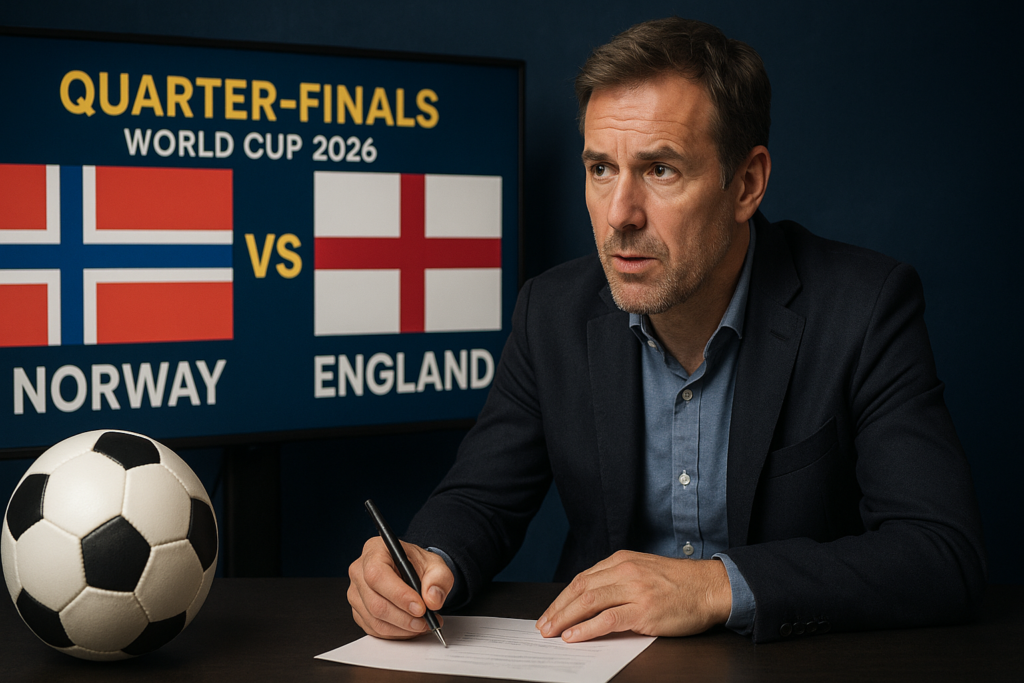
Norway vs England — quarter‑final preview and my prediction Alright, picture this: one of the World Cup’s cleanest shootouts for attention — Erling Haaland’s raw match‑winning power against an England side built for the long haul. That’s the basic dilemma here. Models and pundits mostly nudge you toward England, but Haaland is the kind of player who makes “mostly” feel fragile. Let’s walk through the numbers, the storylines, and how I’d bet my pint on the result. The prediction landscape — what the models actually say Start with the cold math. The Squawka Signal model gives England a 65% chance to progress once draws and penalties are factored in. That’s a clear edge, but not a smothering one. Look at the market pricing for a snapshot of in‑game chances: according to the same Squawka piece, the Kalshi match market has England at 52% to win in regulation, Norway 24%, and a draw at 26%. Squawka’s preview even recommends a neat correct score: Norway 1–2 England. It’s a narrow call that matches the overall tenor — England favored, but by a margin that still leaves room for a Haaland moment. Key storylines Haaland: the X‑factor who can make the tie explode Everyone keeps saying the same thing: Haaland can unstick almost any match by himself. Squawka doesn’t mince words — “Haaland can win it alone.” That’s not hype. It’s a reminder that a single clearance gone astray or a moment of brilliance from him changes probability curves faster than most tactical tweaks. England’s depth and “calmer” defense On the other side of the ledger, pundits and models point to England’s squad depth and defensive composure. The Squawka preview frames England as having “the deeper squad and calmer defense,” which is the reason models give them the higher floor across 90–120 minutes. Depth vs star power — the matchup in three lines Norway’s ceiling is high because Haaland exists; their baseline tilts toward whoever turns up on the day. England’s ceiling might be a little lower, but they’re steadier across the whole pitch — multiple reliable attackers, and a defensive setup that doesn’t feel as fragile. That’s why pundits lean England: more ways to win, fewer ways to lose catastrophically. What the experts are saying The talking heads mostly side with England. On ESPN FC’s quarter‑final preview, panellists repeatedly said they “see England win this” and that “they should win this game,” citing overall talent and squad depth. Another ESPN FC segment that focused specifically on Norway vs England brought together Craig Burley, Shaka Hislop and Jermaine Jones to underline the same idea: Norway are dangerous, Haaland is lethal, but England have the pieces to win as a unit. And yes, there’s always the internet’s loud cousin: a YouTube prediction video that goes big for a 4–2 England win, arguing England are “full of confidence” after their last knockout match. Treat that as fan optimism — fun and plausible, but less rigorous than the statistical models. Tactics and how the game will probably look The common expectation is not a tight 0–0. Squawka predicts “an open, high‑scoring quarter‑final,” which tracks with both sides’ recent tendencies to attack and with the lineup contrasts here. England are likely to try and control tempo. That’s how you blunt single‑player threats — keep the ball, make Haaland run defensive lines rather than sit on the shoulders of your center‑backs. ESPN panellists specifically emphasised England’s ability to control possession and dictate the game when they want to. Norway’s route is simpler: create chances for Haaland and hope England give him something to finish. Against a calm, organized defense, that often means quick transitions, direct passes into channels, and set‑piece moments. If England get stretched, Haaland will find room. Injuries, fitness and selection — the variables to watch There’s a subplot around Bukayo Saka and Declan Rice. ESPN’s preview was headlined with a “HUGE Saka & Rice Injury Update,” which tells you those two are being watched closely ahead of the match. We don’t have verified medical reports from these sources, just the signal that fitness status is a pre‑match storyline. The ESPN discussion still had panellists picking England, which suggests they don’t see likely knocks to those players as match‑flipping — but obviously, if either sits out or is significantly compromised, the balance shifts. Markets, mood and what the fans think Markets and social chatter line up with the expert view: England are favorites, but this will be a game people want to watch because of the “what if.” The Kalshi market snapshot—reported by Squawka—puts England at 52% in 90 minutes; that’s a straightforward market nod to England without treating them like overwhelming favorites. A bracket graphic circulating on Instagram labels this tie among the event’s headline ties, alongside France–Morocco and Spain–Belgium, which says something about how widely people expect this match to matter in the tournament picture. See the quarter‑final bracket graphic if you want a sense of the bracket context. Fans are hyped in the feeds too. A Facebook post celebrating the draw captured a lot of the mood — this is a matchup supporters on both sides were buzzing about as soon as it was set. Here’s the fan post that sums up the social excitement. My prediction — the pick I’d argue at the pub Models and pundits lean England. Markets do too. But I’m not pretending Haaland’s presence turns this into a coin flip — he’s capable of singlehandedly changing outcomes — so I’ll pick carefully. My scoreline: England 2–1 Norway. Why? It’s simple parsing of the evidence. The Squawka model and market pricing both favor England, and Squawka’s recommended correct score is a narrow English win. England’s tactical profile argues they’ll dominate phases of the game and create multiple chances. But Haaland gives Norway a high‑leverage shot at an upset. Two‑one feels like a realistic result that accounts for both those truths. If Saka or Rice were suddenly absent on match day, I’d be more nervous — that’s a scenario
Spain vs Belgium World Cup 2026 Prediction. Spain Wins by a landslide?
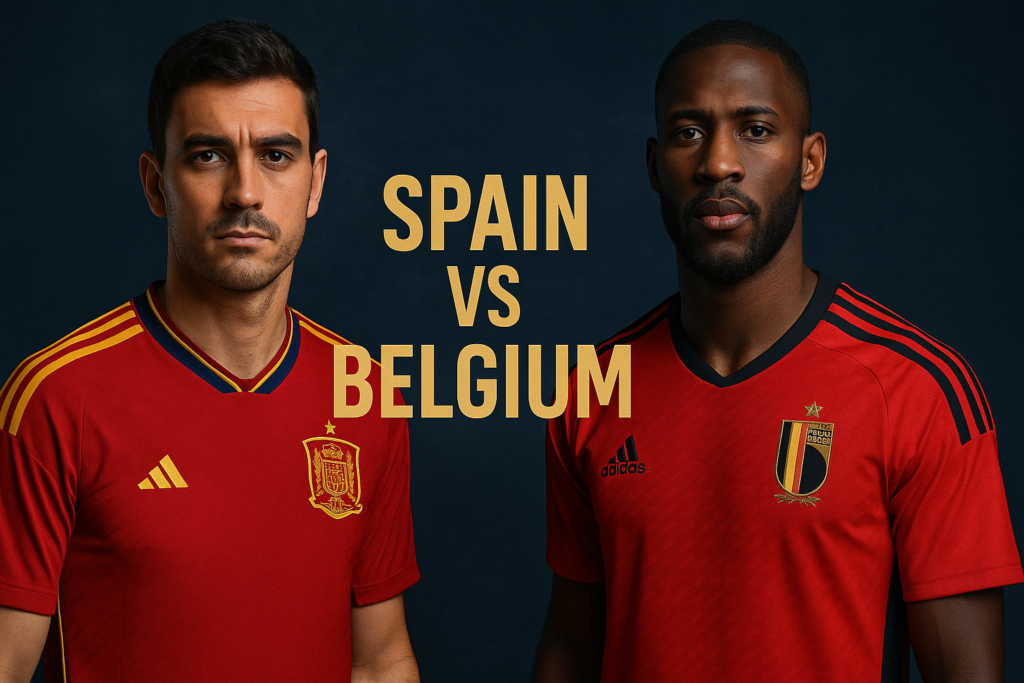
Spain vs Belgium — why most people expect a tight Spanish win in the 2026 World Cup quarters Short version: For the Spain vs Belgium game, the smart money and the models lean Spain, and for once it’s not just because they have more big-name players. This one looks like a neat little chess match where Spain’s defense and control of the ball probably decide things — and most prognosticators are penciling in a low-scoring Spain victory rather than a Belgian upset. How we got here The fixture is set for Inglewood, California, and it’s the kind of World Cup knockout pairing that will make neutral fans divide up their allegiances. ESPN’s quarterfinal preview ran the numbers and notes that every predictor they cited picked Spain to move on, with scorelines ranging from 1-0 to 3-1. That isn’t a lone voice. USA Today’s panel leaned the same way — four of five picks went Spain — and the match previews that matter keep returning to the same themes: Spain’s defensive form, Belgium’s volatility, and a game state where Spain will probably try to own the ball. Tactical preview: why the shape of the game favors Spain There are two blunt ways to think about this: (1) Spain has been ridiculously hard to break down at this tournament and (2) Belgium can be brilliant or patchy — and a structured Spain can turn Belgium’s patches into dead time. Spain’s defense — more than a hot streak The defensive story is loud and measurable: Spain had kept five straight clean sheets heading into this round, a stat highlighted by Squawka’s preview. When a team racks up that many shutouts in a World Cup, it isn’t always pretty football, but it is reliable football. ESPN even described Spain’s back line as “lights-out,” pointing out how structure and individual quality have made them a difficult team to break in major moments. That matters in knockouts more than in group stages — the team that keeps its compactness tends to survive the chaos. Belgium’s ceiling — dangerous but inconsistent Belgium are the classic knockout dark horse: they showed they could switch on and beat the U.S., which ESPN flagged, but the general take is that their tournament has been up-and-down. USA Today called Belgium inconsistent, and that’s the rub — when Belgium hit their level they’re a matchup problem, but they haven’t been at that level every game. So expect Belgium to look for quick vertical moments: fast transitions, direct runners, and set-piece danger. Spain’s job will be to prevent those moments from happening by controlling tempo and limiting turnovers in dangerous areas. How Spain vs Belgium match will probably play out Most previews think Spain will try to control possession and force Belgium into a reactive game. That’s not a guess — multiple outlets that modeled the game came to that same conclusion. Consequence: this should be a low-event match. Spain grinds possession, Belgium tries to pounce. If Belgium can land the first big chance, it becomes a different contest. If Spain scores first, Belgium will have to open up and that plays into Spain’s control-based strengths. Odds, models and what the market thinks The market agrees with the experts, although the prices differ depending on the book and model. ESPN quoted DraftKings odds that had Spain around -340 and Belgium about +260 at the time of publication. Squawka referenced bet365 lines that were much closer — Spain -163, Belgium +425, draw +300 — and also used its model to give Spain a roughly 64% single-match win probability. Numbers like those don’t guarantee anything, but they show where the collective expectation sits: Spain clearly favored, often by a single-goal margin in expert scorelines. The most common specific calls across previews were 1-0 or 2-0 Spain. Responsible note: if you’re looking at markets, remember bookmakers move lines on volume and public money as much as on pure soccer logic. Keep wagers small and sensible if you play along. Players and moments that will decide the Spain vs Belgium Game Knockout matches boil down to a handful of duels and one or two key moments. Based on the reporting and previews, here’s what I’d watch for. Spain’s back line and who is asked to defend the channels. Their defenders have looked settled — that five-clean-sheet run didn’t happen by accident (Squawka). Midfield control. Spain’s ability to keep the ball away from Belgium’s dangerous transition moments is crucial. When they controlled Portugal late (and eventually won via a late goal), that game state was exactly what they want to recreate (see the late Mikel Merino winner reference in USA Today). Belgian moments of individual quality. Belgium can turn a game with a single piece of brilliance; ESPN noted their strong performance against the U.S. as proof they can raise their level. Set pieces and counters. In tight, low-scoring games, nailed set-piece defending and finishing will often swing things. Scoreline scenarios I’m comfortable with for Spain vs Belgium Putting on my slightly biased fan hat, here are three plausible outcomes that fit the public models and match narrative. Most likely — Spain 1-0 / 2-0: Spain controls possession, keeps Belgium quiet, and grinds out a one- or two-goal win. This mirrors the consensus in previews and models. Low-probability upset — Belgium 1-0: Belgium turns one transition into a goal and defends deep. It’s the classic counterpunch route and one reason people still back Belgium. More open shock — Spain 3-1: One of ESPN’s predictors listed a 3-1 Spain; this would happen if Spain gets a lead and Belgium opens up recklessly, creating chances for both sides. Why the mainstream picks Spain in Spain vs Belgium? (and why you can still worry) There are good, sourced reasons for the Spain lean: Real defensive form — five straight clean sheets is a headline you can’t ignore (Squawka). Model and market agreement — both predictive models and many bookmakers favor Spain. Recent momentum — Spain’s last-16 win came via a
France vs Morocco 2026 World Cup quarterfinal predictions
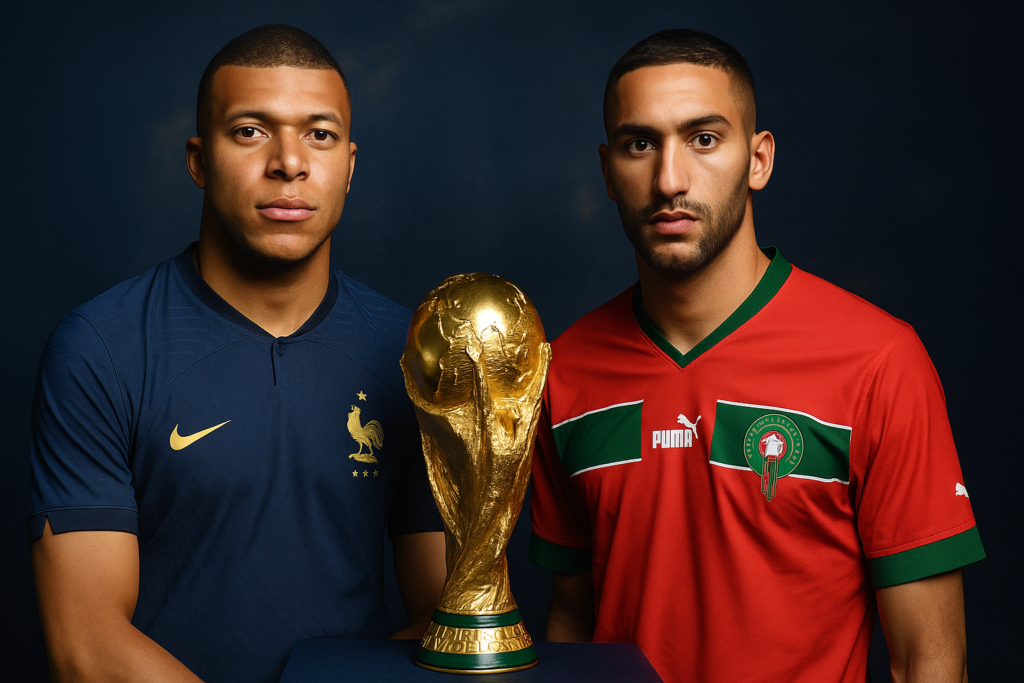
France vs Morocco — who wins the 2026 World Cup quarterfinal? Short answer: everything points to France, but this is the kind of game where “points to” matters less than how the first mistake is punished. Models, markets and most pundits back France to win. But Morocco aren’t walking onto the pitch to make up the numbers. However, when it comes to France vs Morocco, there are many factors you need to account for before making this conclusion. Why this match actually matters France vs Morocco is more than a knockout game. It’s a rematch of the 2022 semi-final that France won, and it’s a clash between a European superpower and an African team that keeps rewriting expectations. USA Today’s bracket preview sets the scene: quarterfinal in Foxborough, with the winner facing Spain or Belgium next, and France still treated as one of the tournament favorites. USA Today bracket panel On paper it’s dynastic consistency versus a team that’s become a continental flag‑bearer. Win the France vs Morocco game and France edge closer to a third straight World Cup semi-final; lose and Morocco keep building an extraordinary modern legacy. How the numbers and experts see France vs Morocco Models The cold math looks at France vs Morocco and favors France. The Opta supercomputer gives France a 61.7% chance to win inside 90 minutes, Morocco a 16.2% chance, and a 22.1% probability of a draw leading to extra time or penalties. That draw number is important—it tells you the model expects a significant portion of simulations to be close, even if France are the most likely outright winners. Markets The betting world lines up with the analytics for France vs Morocco. ESPN’s quarterfinal piece cites DraftKings prices with France around –370 to progress and Morocco +285 to qualify, while other outlets show similar favorite pricing across match and qualification markets. ESPN preview Markets aren’t destiny, just a collective read of risk. They’re saying France are heavy favorites, but the odds don’t scream rout—they point to a narrow margin being most likely. Pundits and preview boards Most mainstream pundits pick France in the France vs Morocco game by tight scores: 1–0, 2–0 or 2–1. USA Today’s panel is unanimous for France with scorelines like 2–0 and 3–1. USA Today bracket panel ESPN’s panel similarly favors France, though Mark Ogden is the notable outlier predicting a 1–1 draw and Morocco to win on penalties, citing Moroccan resolve to avenge 2022. Bleacher Report even has one writer boldly picking Morocco 2–1. So there’s a minority that smells an upset. Bleacher Report Put together: models + markets + the majority of experts = France. But there’s credible dissent, not just wishful thinking. What each team brings to the table Here’s a concise breakdown of the upcoming France vs Morocco quarterfinals match: France — power, depth, balance France look like the textbook big team at a World Cup: enough firepower to punish chances, and enough defensive talent to blunt counters. Previews repeatedly point to their balanced tournament performance—sharp in attack and mean at the back. Squawka’s model The likely XI circulating in preview pieces reads like both experience and youth: Maignan in goal, Upamecano and Saliba central, Digne and Koundé at full-back, with the forwards built around Kylian Mbappé and Ousmane Dembélé. Racing Post’s predicted lineup underlines that scale of options. Racing Post predicted XI That depth lets France change the game without panicking. In practice, that means they’ll likely try to control tempo, squeeze space and look to win by making individual moments count. Morocco — grit, structure, momentum Morocco arrive with the “we belong here” resume. The Analyst points out that only twice has an African team gone unbeaten in their opening five World Cup matches—both times Morocco (2022 and 2026). That’s a stat that doesn’t exist by accident. Opta/Analyst piece They’re solid defensively, excel at organization, and live for transition and set-piece moments. That’s the profile of a team that can make a favorite’s life miserable if the favorite gets complacent. Tactical matchups to watch There are three micro-battles that will decide the game: France’s wide attackers vs Morocco’s full-backs; midfield control vs counter transitions; and set-piece concentration on both sides. Wide threats vs disciplined full-backs: Mbappé and Dembélé (and any wide support) will test Morocco’s defensive discipline; Morocco will need their full-backs to be disciplined and compact. Possession vs counters: France should dominate the ball; Morocco’s danger comes when they win it back and sprint forward. Set pieces and margins: In tight games, a single corner, a deflected free-kick or a penalty often decides things—both sides know that. Multiple previews expect a low‑scoring, cagey affair. Sports Mole even predicts a 1–0 France win after extra time, stressing a tense contest where a single breakthrough decides it. Sports Mole Squads, fitness and selection notes Prior to France vs Morocco match, there aren’t headline injury lists in the snippets we’ve got, but the consensus across preview pieces is simple: France are largely at full strength and have an embarrassment of options, while Morocco come in with their core group intact and riding momentum. Racing Post’s predicted XI for France assumes no major absences. Racing Post predicted XI So tactically it’s first-choice vs first-choice—no convenient excuses for either side. That makes the coaching and game plan even more important. The off-pitch stuff that creeps into the match This tie has more subtext than most quarterfinals. People keep pointing to the 2022 semi, Morocco’s historic continental rise, and the political and cultural resonance that comes with a big game between France and Morocco. As one YouTube feature put it, the match feels “bigger than a quarter-final,” tapping into diaspora stories and symbolic importance. That’s not to overplay it—football is decided on the pitch—but emotional narratives can sharpen edges and give players an extra sliver of motivation. YouTube analysis So who will win in France vs Morocco? My take — and why I’m not shouting it from a rooftop Look, when models, markets and most of