
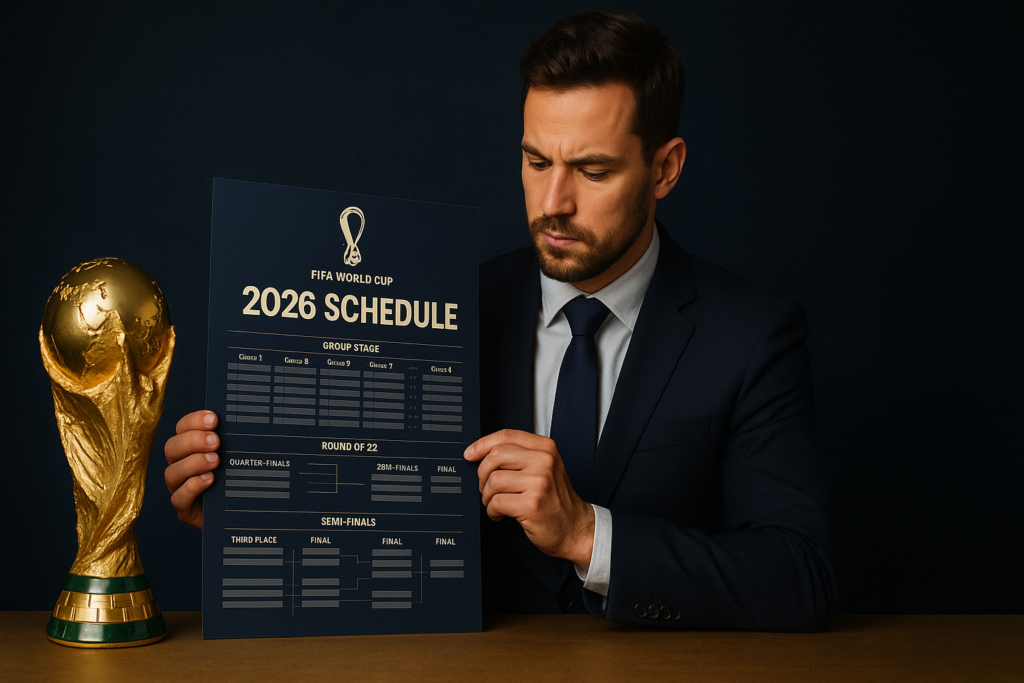
How the 2026 World Cup schedule actually works — dates, big openers and what to watch
Short version: the FIFA World Cup 2026 Schedule is bigger, longer and spread across a continent. That means more games, more travel, and a few new wrinkles that actually change how teams will approach the whole tournament. If you want to know when it starts, who opens where, and which early games matter most — here’s the roadmap, with the bits you need to bookmark.
Quick primer: the new format (and why it matters)
This is the first 48‑team World Cup, not 32. Teams are split into 12 groups of four, and the tournament advances the top two from each group plus the eight best third‑place teams into a new round of 32. The expansion means 104 matches instead of 64, which changes everything from rotation plans to the feel of the group stage — fewer dead rubber games, more chances for upsets, and more moments when a third‑place finish is still golden.
Tie‑breakers stay familiar: points, goal difference, goals scored, head‑to‑head, disciplinary points, and, if fate demands it, drawing lots — the usual FIFA playbook from previous tournaments, just applied across a larger field. The whole setup is explained in the same coverage that lays out the expanded schedule and match calendar.
When and where: the headline dates and venues
The tournament runs from June 11 to July 19, 2026, with the final played in the New York metro area on Sunday, July 19. That last bit will be huge — it’s the first World Cup final staged on U.S. soil.
The event is tri‑hosted by the United States, Canada and Mexico, and FIFA lists 16 host cities across those three countries. Expect stadiums from coast to coast: Seattle to Miami, Toronto to Mexico City, and big NFL venues turned soccer stages like SoFi and AT&T.
Big numbers to remember
- 104 matches total (72 group games, 32 knockout matches).
- 16 host cities across the U.S., Canada and Mexico.
- Final: July 19 in the New York/New Jersey area.
Those figures come from the official schedule and longstanding coverage that mapped out the tournament format and match calendar.
Opening day and the first week — the fixtures that set the tone
The tournament kicks off on Thursday, June 11, 2026. The opening double‑header is in Mexico: the day starts with Mexico vs South Africa at Estadio Azteca, and finishes in Guadalajara with South Korea taking on Czechia. Mexico opening in the Azteca is textbook drama — packed stadium, altitude, history — and nobody’s treating that as a neutral piece of theatre.
Host nations get big spotlights early. The U.S. plays its opener at SoFi Stadium in Los Angeles, a venue confirmed to host eight matches including the U.S. men’s first game. Canada’s first match is a home game on June 12 at BMO Field in Toronto, while Mexico’s fixtures run through a mix of Azteca and Guadalajara dates.
Selected marquee openers
- Brazil vs Morocco at MetLife Stadium on June 13 — one of the first real heavyweight tests.
- Germany vs Curaçao in Houston on June 14 — weird draw on paper, but that’s the charm of early World Cup games.
- France vs Senegal at MetLife on June 16 — a heavyweight meeting that could preview deep knockouts.
- Spain vs Cape Verde in Atlanta on June 15 — fancy on paper, but debutant nations have a habit of making life uncomfortable.
These match days are spread across U.S. time zones, so expect an almost daily parade of high‑profile fixtures in the first two weeks.
Miami, Los Angeles, Mexico City: the city guides in brief
Some cities are getting festival‑level football. Miami’s Hard Rock Stadium hosts a chunk of group play, a round of 32 match, a quarterfinal on July 11 and the bronze match on July 18. That means Miami’s on the knockout trail and will be a hub for fans chasing big games.
Los Angeles (SoFi) is the symbolic American launchpad — the U.S. opener and several other headline matches. Mexico City’s Azteca, with its World Cup history, hosts the opening game and will be a cultural focal point for the tournament in North America.
These venue assignments come from the host‑city match schedules and FIFA’s match calendar.
The knockout roadmap: round of 32 and what follows
Because the format pushes 32 teams into the first knockout round, the tournament adds an extra knockout stage (round of 32) before the traditional round of 16. The group stage ends around June 27 and the knockouts begin shortly after, with matches spread across the 16 host cities.
That next phase runs through July: round of 32, round of 16, quarterfinals, semifinals, a third‑place game, and the July 19 final at MetLife. Reuters and FIFA have graphics and calendars laying out the day‑by‑day progression if you want the visual bracket.
Storylines that actually matter — not just hot takes
There are a handful of real, on‑field things this schedule forces teams to reckon with. I’m less interested in the usual “X vs Y” hype and more in how the structure changes coaching, tactics and fatigue management.
1. Squad rotation and travel logistics
With 104 matches across a continent, teams will travel between different climates and time zones — Seattle to Miami or Toronto to Mexico City is a different animal than Paris to London. That affects recovery, lineup continuity and who gets minutes.
Coaches who ignore the mileage could find their best XI worn out by the knockout rounds. Expect managers to treat the expanded group stage as a marathon — rotate where it makes sense, and prioritize players who can handle the travel schedule.
2. The “best third place” safety net
Because eight third‑place teams advance, there’s strategic value in aiming for a gritty draw or a narrow loss, then banking on goal difference or other teams’ results. It’s similar to Euro formats that produced dramatic last‑day permutations; expect groups to be live right to the wire.
3. Home pressure for the three hosts
Hosting isn’t a free pass. The U.S. will feel a smash of expectation opening at SoFi, Mexico has the Azteca history and proud supporters demanding progress, and Canada will want to improve on a 2022 group exit with a win in front of its fans in Toronto. The schedule hands them early moments to set momentum — and early stumbles would be brutally magnified.
4. Upsets are more likely — and more valuable
With more knockout spots, an upset in a single group match can swing an entire bracket. That makes matchups like Spain vs Cape Verde or Brazil vs Morocco more than novelty games — they can reshape paths in the bracket because the margin for error is bigger for some teams.
Practical context: injuries, form and odds (quick notes)
The official match schedules and host‑city pages list fixtures, times and stadiums, but they don’t consolidate up‑to‑the‑minute injury reports or transfer news. Squad health and club form still come from separate sources in the months leading into June.
One useful thing to check as the tournament approaches is the live schedule pages that also show market lines and over/unders; those give a snapshot of who’s seen as a favorite in early matchups, but markets move with team news and injuries.
FAQs — the bits fans keep asking
Q: When does the tournament start and finish?
A: It runs from June 11 to July 19, 2026 — opening day in Mexico on June 11 and the final on July 19 in the New York/New Jersey area.
Q: How many teams and what’s the format?
A: There are 48 teams split into 12 groups of four. The top two in each group plus the eight best third‑place teams advance to a round of 32, then a traditional knockout progression follows.
Q: Where is the opening match and who plays it?
A: The tournament opens with Mexico vs South Africa at Estadio Azteca on June 11 — a proper opening double‑header in Mexico that day completes the kickoff party.
Q: When and where does the U.S. play its first game?
A: The United States opens at SoFi Stadium in Los Angeles/Inglewood, a stadium slated to host multiple matches including the U.S. men’s opener.
Q: When do the knockouts start?
A: Round of 32 games begin once group play wraps up around June 27, then roll through July with the final on July 19.
Q: Where can I find the full day‑by‑day bracket?
A: FIFA’s match calendar and outlets that have published the schedule provide the day‑by‑day bracket and timing — they’ll be the authoritative place to check as matchups crystallize.
One thing to remember
More teams and more matches mean the 2026 World Cup won’t be a quick sprint — it’s a continental tournament with some genuine tactical chess. The schedule forces managers to think about travel, rotation and the value of a third‑place route. So enjoy the extra early drama: there will be more surprises, and the traditional powers can’t sleepwalk any opener. If you want a single page to check first, start with FIFA’s tournament pages and then keep an eye on the major broadcasters’ live schedule grids for the latest kick‑off times and market context.
Follow William Hill Live for more sports news!