
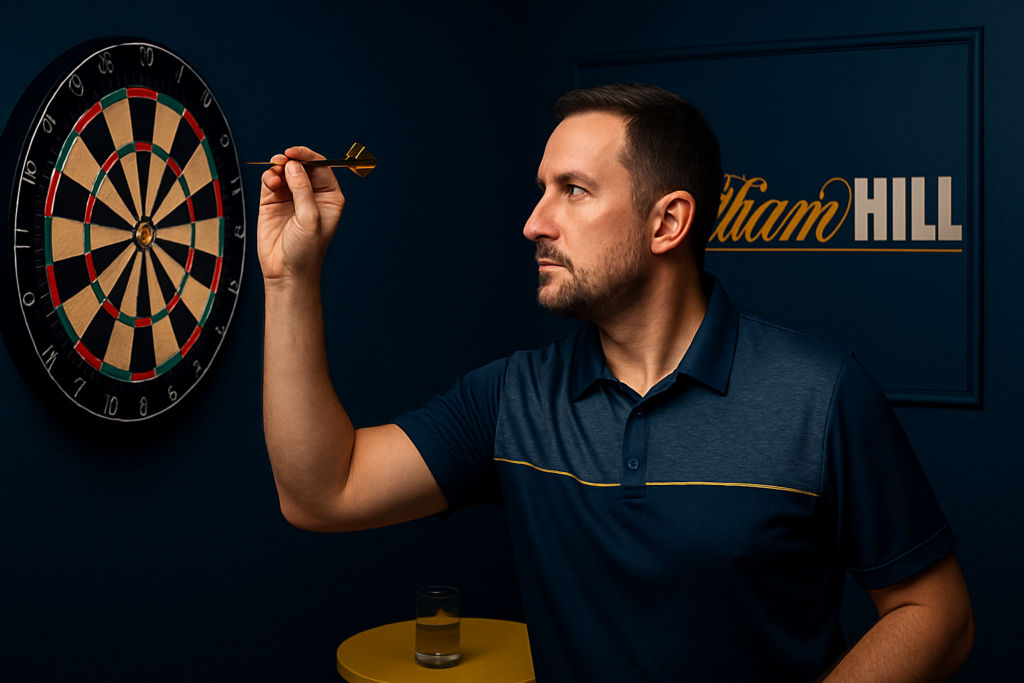
William Hill Darts Preview: Can Jonny Clayton’s 180s Power Topple Gerwyn Price at the 2026 European Championship?
Estimated reading time: 6 minutes
Key takeaways
- William Hill names Gerwyn Price the tournament favourite while tipping Jonny Clayton to lead the 180 charts.
- Price’s matchplay consistency and finishing under pressure are framed as the factors that win tournaments.
- Clayton’s heavy 180 scoring can shorten legs and shift momentum, but finishing remains decisive.
- Other contenders and handicaps (Littler, Ratajski) mean draw and matchups will materially affect outcomes.
William Hill darts: what the preview actually says
William Hill’s October preview for the European Championship lays this out fairly plainly.
Their article tips Gerwyn Price to win with a handicap while singling out Jonny Clayton as the most likely player to record the tournament’s highest 180 tally, and it even mentions Krzysztof Ratajski getting a handicap advantage in places.
You can read the specific daily preview and tips in their write-up for Sunday, 25 October 2026, which is where those calls are made.
William Hill also runs a dedicated darts news hub and keeps rolling coverage of tournaments and player form, so their takes are meant to be more than offhand opinions — they’re built from ongoing coverage and match-by-match context.
That split — Price for the trophy, Clayton for the gutsy scoring stat — is exactly the conversation the tournament needs.
It forces the broader question: which is more decisive in this format, red-hot scoring or the kind of pressure play Price is known for?
William Hill darts: Why Gerwyn Price is the player to beat
William Hill’s view puts Price at the summit for a reason.
He’s been central to their previews for the World Grand Prix and this European event, and the writing around him isn’t just about raw power; it’s about how he shows up in matchplay moments.
Here’s what that means in practice:
- Matchplay temperament: Price has a reputation for grinding out legs and turning heat up when the scoreboard matters. That’s the kind of profile that often carries through multi-round events.
- Consistency under pressure: William Hill’s preview flagged him as the pick with a handicap, which is really shorthand for “he’s expected to win by a margin” — not just sneak through.
- Tournament pedigree: Coverage in William Hill’s previews links his recent deep runs and presence in their World Grand Prix previews to why he’s being trusted here.
You don’t need a fancy stat line to see why that’s persuasive.
In knockout darts, legs don’t care whether your highest checkout was a 170 — they care who first closes them out when the heat is on.
William Hill’s projection suggests Price is the one likely to do that consistently across the draw.
Jonny Clayton 180s and the heavy-scoring plan
Meanwhile, William Hill has a clear nod to Clayton as the man for highlight reels: they tip him to rack up the most 180s in the event.
That’s explicitly called out in their European Championship preview and is echoed across their tournament coverage.
Why that matters: Clayton’s game can tilt matches in two ways.
- Psychological shock: A string of 180s doesn’t just add points; it breaks opponents’ rhythm and forces them out of comfort zones.
- Shortening legs: When Clayton is hitting heavy, legs finish faster. That changes the math for someone who thrives on attritional, grinding leg play.
William Hill also lists specific markets for total match 180s on their site, which is another reflection of how the tournament often comes down to big-scoring bursts as much as steady averages.
Put simply: Clayton’s 180s are a weapon.
The question is whether they’re a decisive weapon across an entire tournament, or just brilliant, short-lived surges.
Tactical showdown: scoring fireworks vs matchplay grind
Think of this as two chessboards superimposed.
Clayton plays for the explosive combination; Price prefers the long positional grind.
Clayton’s ideal match looks like this: he lands a few maximums early, forces the opponent to play catch-up, and then pulls the trigger on finishes while the other player is on the wrong part of the scoreboard.
Price’s ideal match is more pedestrian but no less effective: he keeps averages respectable, seizes crucial doubles, and doesn’t give the opponent the breathing room to turn a high-scoring burst into a match-turning lead.
Key matchup variables
- Finishing under pressure: If Price is hitting key doubles at the right time, Clayton’s 180s are muted in importance.
- Flight of momentum: Heavy scoring early forces opponents into riskier finishes; if they miss, momentum compounds. That favors Clayton-style games.
- Length of match: Longer matches generally reward consistency. Shorter matches give more value to explosive scoring.
William Hill’s split prediction reflects all of this.
They’re effectively saying Price wins the tournament because matchplay makes the difference over several rounds, but Clayton is the most likely man to light up the scoreboard with 180s along the way.
How opponents like Littler and Ratajski change the picture
The preview doesn’t lock this into a two-horse race.
William Hill mentions other names in the mix — Luke Littler and Krzysztof Ratajski among them — and even suggests handicaps for some players, which complicates the tactical landscape.
Littler brings youthful fearlessness and heavy scoring of his own; Ratajski’s mention with a handicap tweak in William Hill’s write-up signals that matchups matter.
That’s crucial because Clayton versus Price is not a foregone conclusion on paper when the draw hands them tricky paths.
The presence of other heavy scorers and grinders makes the tournament a tactical minefield.
Clayton might stack up 180s against certain opponents and still lose against others who can blunt his finishing, and Price could run into a player whose scoring spikes at the right time to upset his rhythm.
William Hill darts: markets and props to watch
If you like keeping an eye on the match details, William Hill runs a few targeted markets that reflect the Clayton–Price debate.
Their darts hub carries tournament coverage and previews, and their darts hub and their match listings include performance lines such as total match 180s — the exact stat that names Clayton as a favourite to top the 180 charts.
Props worth noting from the preview era:
- Most 180s in the tournament — Clayton flagged as likeliest.
- Handicap calls — Price preferred to win with a margin in William Hill’s piece.
- Match-level 180s lines — these directly reflect how much value heavy scoring has per match.
All of which is to say: the metrics to watch are already identified.
Clayton’s 180 rate will be a headline stat, but the completion of legs and doubles under pressure is what decides crowning moments.
What actually wins tournaments: numbers versus narrative
There’s a reason William Hill’s split picks feel credible.
Over a long enough tournament, you need both: the ability to score big and the temperament to close legs when it matters.
Clayton’s 180s create opportunities. Price’s matchplay consistency converts them into victories.
If one player had both in peak form, that’d be the end of the conversation — but what we’ll likely see is trade-offs.
That’s where tactical nuance matters.
A Clayton performance pumping out 180s against mid-field opposition does one thing. Doing it when the scoreboard chills at 2–2 or 8–6 against someone like Price is another.
The venue, stage pressure, and draw paths — all factors William Hill’s ongoing coverage flags and that fans should watch — will tilt who benefits from the heavy scoring.
And yes, the previews name names and scenarios. That’s what makes following William Hill darts news useful for fans who like to parse matchups rather than just root for their favourite.
There’s also an element of unpredictability: a player can go cold on the day, or a surprise run can flip the whole balance.
William Hill’s previews don’t pretend otherwise — they present probabilities, not certainties.
How to watch the tactical battle unfold
- Track match-by-match 180s and when they occur. Early bursts are different from late-match maximums.
- Watch doubles success rate under pressure. That’s where Price tends to win legs that look otherwise even on scoring.
- Follow stages and opponents. A hot draw can give Clayton room to breathe; a brutal draw might test Price earlier.
All of these are covered in varying depth through William Hill’s ongoing tournament pieces and match listings, which is helpful for anyone following the storyline the previews establish.
William Hill darts: what to remember before throw
The neatest takeaway from the previewing work is this: William Hill darts frames the European Championship as a clash of styles more than a straight favourite-versus-giant-killer tale.
Price is the steady machine expected to grind his way to the deep rounds.
Clayton is the highlight-reel artist expected to top 180 counts and change games in bursts.
Both are plausible champions under different rhythms of the tournament.
That’s the tactical storyline to watch — and the one that will probably keep commentators and fans entertained long after the winners are dusted off.
For those who like to keep tabs on the specifics William Hill is highlighting, William Hill’s darts hub collects those previews and context, and their match pages list the performance lines that make the Clayton–Price debate tangible.
Total match 180s markets are especially useful if you want to see how often the big scores are expected to land in specific fixtures.
And the specific William Hill preview that set this narrative down — naming Price the player to beat and Clayton the top 180 contender — is here for the full rundown.
William Hill’s European Championship preview
That’s the parade route for the claims we’ve been discussing.
Now for the fan part: who do you root for?
The methodical grinder who converts pressure into trophies, or the man who lights the scoreboard and gives you something to shout about?
Either way, the European Championship looks set to be a brilliant tactical ride.
What fans should watch live
- When Clayton scores 180s — are they early fireworks or late clutch blows?
- Price’s doubles at crucial junctures — does he close legs when momentum shifts?
- How other names like Littler and Ratajski interrupt the simple Clayton-v-Price narrative.
Those moments will tell you which side of William Hill’s preview holds true.
William Hill darts keeps the coverage coming, so if you want ongoing updates, their pages collect the evolving storylines as the event progresses.
William Hill’s darts listings are where those match-level lines and updates appear.
So — expect big scores, expect stubborn leg play, and enjoy the tactical chess. It’s going to be a lovely mess.
Will William Hill darts’ picks be right? Only the oche will tell — but the preview has given us the two clearest storylines of the 2026 European Championship: Price for the title, Clayton for the 180s.
Will Jonny Clayton’s 180s be enough to topple Gerwyn Price? That’s the question everyone will be asking as the tournament unfolds.
Frequently Asked Questions
What did William Hill darts say about Price and Clayton?
William Hill’s European Championship preview named Gerwyn Price as the player to beat — even tipping him to win with a handicap — while specifically suggesting Jonny Clayton is most likely to record the tournament’s highest number of 180s (William Hill’s European Championship preview).
Is Jonny Clayton likely to top the 180s list?
William Hill explicitly tipped Clayton for the most 180s, and their match listings include total match 180s markets to track that stat across fixtures. Clayton’s game profile — heavy scoring bursts — makes him a natural candidate.
Why is Gerwyn Price favoured to win?
The preview cites Price’s matchplay strengths and consistency, portraying him as the most likely player to grind through the draw and collect wins across several rounds. William Hill’s ongoing coverage of his form in events like the World Grand Prix feeds into that view (matchplay moments).
Do other players change the Clayton vs Price storyline?
Yes. William Hill mentions other contenders like Luke Littler and Krzysztof Ratajski, and even uses handicap adjustments in their preview, which shows they expect the draw and matchups to materially affect outcomes (William Hill’s darts hub).
Where can I follow the William Hill darts previews and match lines?
William Hill maintains a darts news hub for previews and commentary, plus match listings for performance lines and match-level stats — both are updated as the tournament runs.
Will Clayton’s 180s be enough to beat Price?
It’s possible but not guaranteed. William Hill’s preview essentially splits the outcomes: Clayton for the 180s, Price for the title. The tournament will be decided by how those 180s line up with finishing under pressure and match length — factors the previews highlight rather than settle.
One thing to remember:
William Hill darts has set the narrative: Price for steady wins, Clayton for maximum moments. How those two profiles intersect is the tactical story of this European Championship.