
Gleason Piter prediction can No.3 seeds avoid a tiebreak?
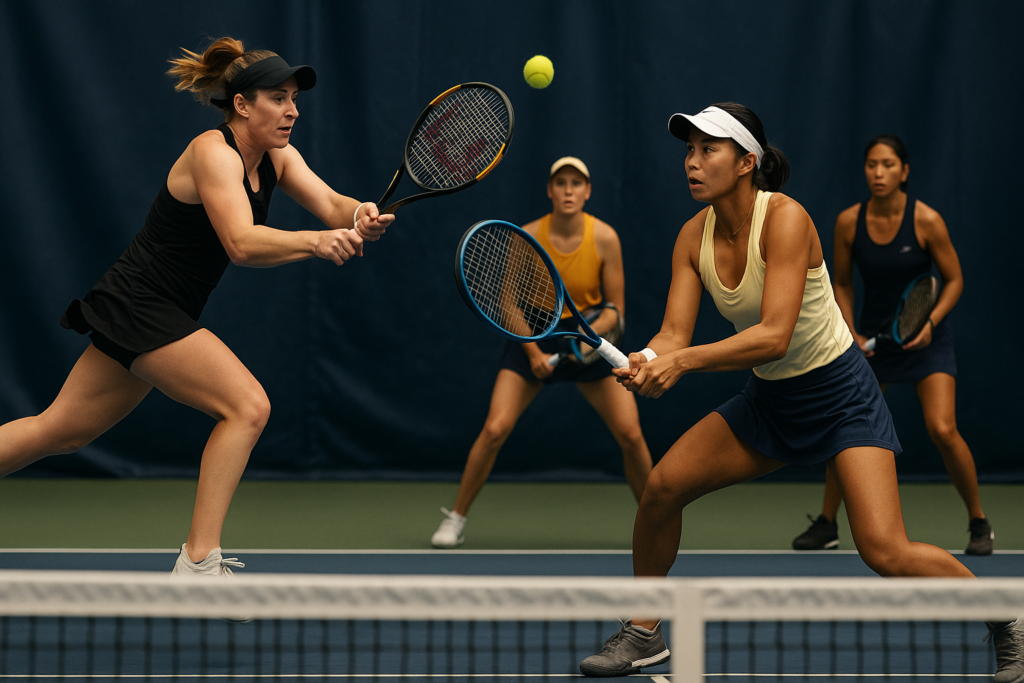
Gleason/Piter vs Kobori/Plipuech prediction — can No.3 seeds avoid a match‑tiebreak upset in Guadalajara? Estimated reading time: 3 min read Key takeaways Gleason/Piter are the clear favourites based on seeding and straight‑set form this week. Kobori/Plipuech carry real upset potential in match tiebreaks, highlighted by a 10–3 tiebreak vs the No.2 seeds. The match hinges on whether the seeds can keep the scoreboard tidy; a tight second set opens the door for an upset. Match context and scheduling This is a women’s doubles semifinal at the Guadalajara Open presentado por Santander. The matchup — Gleason/Piter vs Kobori/Plipuech — is listed on major scoreboards as the semis and has been picked up across tournament listings. BBC’s schedule shows it as a late session, and a live scoreboard entry gives a local time of 17/09/2026 at 20:00. Expect this in the evening session in Guadalajara. Both the BBC listing and tournament aggregators confirm this is the penultimate step before the final, so there’s real prize money and ranking weight on the line. That matters when you look at how both teams have handled pressure so far this week. Gleason Piter prediction — how the No.3 seeds got here Gleason and Piter came in as the No.3 seeds, which tells you their combined doubles ranking is materially higher than Kobori/Plipuech’s. The draw hasn’t bitten them so far: they beat Panova/Sorribes Tormo in their early match and then handled Harrison/Hewitt in the quarters 6–2, 7–5 in about 1:20, according to the match logs. That quarterfinal scoreline is instructive. A 6–2 first set suggests they can build control quickly. The 7–5 second set shows they can close out a tighter one without it slipping to a match tiebreak. Why that form matters In doubles, the ability to close two sets matters more than raw flash. Gleason/Piter have done that this week repeatedly, which is why prediction markets are leaning toward them. The No.3 seed tag isn’t just bureaucracy; it reflects the consistency they’ve shown across the season and how they’ve handled mid‑to‑high level opposition in Guadalajara. Kobori Plipuech prediction — the underdogs with a dangerous blueprint Take Kobori and Plipuech seriously when the result hinges on momentum. They upset the tournament’s No.2 seeds, Muhammad/Olmos, in a remarkable comeback — losing the first set 1–6, rebounding 6–3, and then winning the match tiebreak 10–3 — a sequence documented in the round summaries. That kind of lopsided tiebreak win is not a fluke; it suggests they can mix calm heads with aggressive momentum in a shootout. After that, they didn’t limp into the semifinals. They beat Cavalle‑Reimers/Salden 6–3, 6–4 in about 1:13 in the quarters, which shows they can also dispatch pairs in straight sets when their game clicks. So they bring two faces to the court: the scrappy comeback crew and the efficient breaker of serves — both dangerous in different ways. Why they’re scary in match tiebreaks That 10–3 tiebreak over Muhammad/Olmos is the headline stat. In match tiebreaks the scoreboard is compressed and momentum swings matter hugely; a 10–3 scoreline like that speaks to both nerve and execution in the big points. Kobori/Plipuech haven’t been a flash‑in‑the‑pan — they’ve produced a clean straight‑sets quarterfinal win as well — but the tiebreak result is the reason they’re legitimately a threat in a one‑big‑tiebreak scenario. Style clash: control vs high variance If you try to sum up this match in two words: Gleason/Piter are control; Kobori/Plipuech are high‑variance. The seeds have been collecting wins without needing the rollercoaster. The underdogs have already taken the rollercoaster ride and come out hollering. Gleason/Piter: straight‑set wins, steady closes, No.3 seed — the kind of pair that builds leads and tries not to hand matches back on a platter. Kobori/Plipuech: resilient, willing to take big swings, proven ability to dominate a match tiebreak (10–3 vs Muhammad/Olmos). That means the match will often look like a tug of war between patience and pulse. If Gleason/Piter get ahead and keep the scoreboard tidy, the match finishes in two. If Kobori/Plipuech get sloppy breaks back, or the seeds let the second set become tight, the roof opens for an upset via a match tiebreak. Gleason Piter prediction — what the markets say Markets echo the narrative. A regulated prediction market pegs Gleason/Piter at about a 72% win probability, which is consistent with the straight‑set form we discussed. Another tennis odds snapshot shows pricing around 1.29 for the seeds and about 3.08 for Kobori/Plipuech, again signalling a clear favourite. Not every market was unanimous — a decentralized platform had this priced 50/50 at one point — but the most liquid lines give the No.3 seeds a strong edge. That divergence might reflect timing (lines shifting after particular matches) or different trader views, but the consensus leans toward Gleason/Piter. Markets aren’t prophecy; they’re probability condensed. They say the safer route is to assume a Gleason/Piter win, but they also quantify the non‑zero chance of an upset. And given Kobori/Plipuech’s form, that non‑zero is meaningful — especially if the match goes to a tiebreak. How the semifinal will hinge Here’s where the match will live and die: If Gleason/Piter avoid sloppy holds and serve out the tight moments, they’ll win in two sets. Their season and this week’s scores are built on that blueprint. If Kobori/Plipuech can drag a set into a 5–5 or 6–6 moment, they have the match‑tiebreak pedigree to turn the tie upside down — remember 10–3 vs the No.2 seeds. Serve holds, break conversion at 4–4, and the first few points of any match tiebreak will be decisive. In doubles, the couple of points after changeovers swing the tiebreak more than they do in singles. The underdogs already proved they can win those mini‑battles this week. Prediction: who wins and how Weighing seedings, form and markets together: Gleason/Piter are the likelier winners. The No.3 seeds’ straight‑set wins and their higher seeding make them the safer call in the semifinal. The clearest market read puts them at about a 70–72% chance to
Pegula vs Navarro prediction Pegula ~80% to win on Ashe
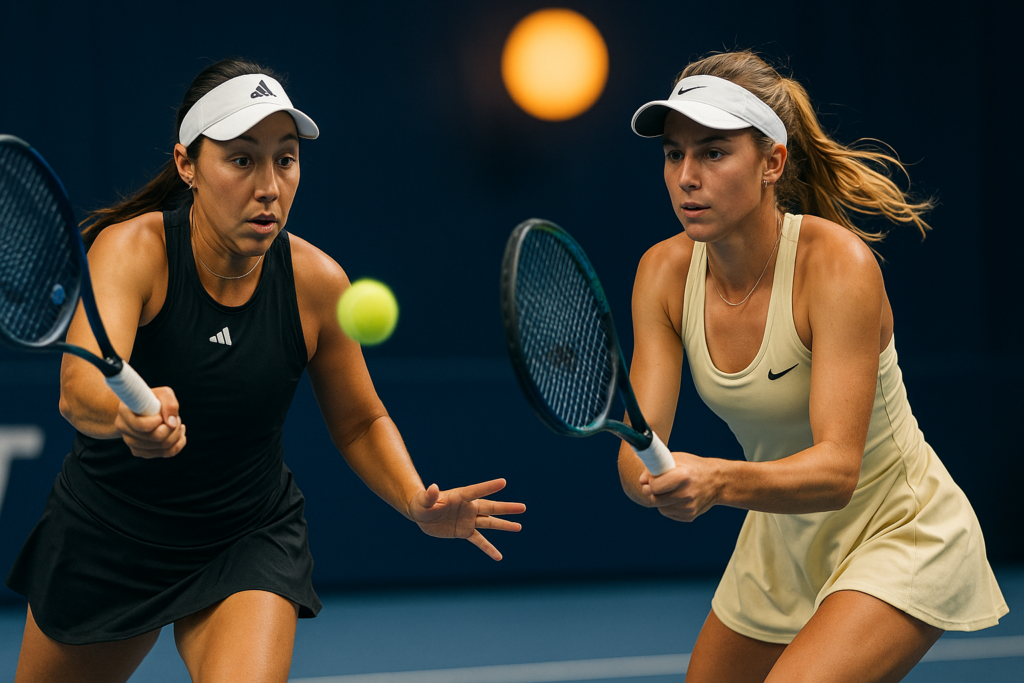
Pegula vs Navarro prediction: How an 80% favorite could still be pushed to three sets on Ashe Estimated reading time: 4 min read Key takeaways Predictive models give Jessica Pegula roughly a 78–80% chance to win this US Open quarterfinal. Emma Navarro’s aggressive, early‑ball game makes a tight, three‑set match plausible if she serves and limits errors. Head‑to‑head and hard‑court experience favor Pegula, but Navarro’s high‑variance bursts can swing a set. Pegula vs Navarro prediction: Why models put Pegula at ~80% Most analytic previews and betting models converge around the same number — Pegula gets about a 78–80% chance to win this match. One dedicated preview explicitly lists Pegula at roughly a 79.7–80% probability, with Navarro around 20–23%.[Dimers prediction] Why the gap? It’s straightforward in tennis terms: Pegula is No. 3 in the world, seeded third at this US Open, and her game is built for consistency on hard courts. Previews cite Pegula’s solid first‑serve numbers, low unforced error counts, and excellent long‑rally record as the things that tilt the matchup in her favor.[SofaScore preview] Models also bake in experience. Pegula has more Slam quarterfinal experience and tends to avoid the kind of streaky, error-prone spells that allow a lower-ranked aggressor to turn a match on its head. When a player minimizes mistakes in big matches, probabilistic models reward that a lot. Pegula vs Navarro prediction: How Navarro’s game creates the “three‑set” scenario Now the small print: Navarro is not a textbook underdog. Seeded 26 and ranked in the mid‑20s, she’s been riding genuine momentum to get to this stage.[Flashscore live hub] Across previews and past meetings, Navarro is described as a higher‑variance player — aggressive, willing to take the ball early, and capable of ripping winners off both wings. That style produces streaks of dominance and also streaks of errors. If she puts together long runs of clean aggression, she absolutely can steal a set off Pegula.[China Open H2H preview] So the likely scorelines you should imagine are tight: think two tight tie‑break sets, or Pegula takes it in three where Navarro snags the middle set on a purple patch. Several previews even specifically flagged a 2–1 Pegula outcome as plausible and sensible for wagering markets, which is telling because it’s what both the models and matchups imply.[DraftKings pick] Head‑to‑head and recent meetings: keys to reading the matchup They’ve met on tour before, and the pattern matters. Across sources covering Bad Homburg 2025 and the China Open 2025, Pegula holds a positive head‑to‑head, winning their completed meetings on hard courts.[Bad Homburg preview][Sportskeeda preview] That trend matters because it’s not just wins — those matchups showed Pegula handling Navarro’s pace and taking time away from her. When that happens, Navarro’s edge (pressure through early ball) is blunted and her error count rises. Previews repeatedly point to Pegula’s better hard‑court experience as the decisive factor in their past meetings.[SofaScore preview] Serve, first ball and error management — the tactical keys First‑serve percentage If Navarro is going to threaten, she needs a high first‑serve percentage. The previews and models emphasize this as the clearest route to victory for her: get a bunch of free points or neutralize Pegula’s footing in return so the rallies start on Navarro’s terms.[SofaScore preview] Unforced errors Navarro’s aggression is a double‑edged sword. When it produces winners, she looks like a top player; when it produces errors, she folds into long defensive rallies that favor Pegula’s clean, directional hitting. Models literally count on Pegula’s lower unforced‑error profile over the course of a match, which is why the math lands on Pegula even if Navarro has higher peak moments.[Dimers analysis] Big‑match composure Experience matters in the late rounds of a Slam. Pegula’s been around bigger matches and the previews note that as another edge — the sort of intangible that predictive models fold into probability via past Slam performance.[Tennis.com match page] What the odds and markets are saying Odds give another window into expectations. One aggregated market priced Pegula roughly between −357 and −385 on the moneyline, with Navarro in the +310 to +327 underdog window — which aligns with the near‑80% implied probability the models spit out.[Dimers prediction] Other bookmaker tracking shows Pegula around 77–78% implied and Navarro around 23% — again the same neighborhood. That market consensus is useful because it reflects live money and public sentiment alongside algorithmic models.[Market tracker] One gambling‑facing preview even recommended Pegula 2–1 at decent odds, which is another data point nudging the narrative: the favorite to win, but not in a walkover.[DraftKings pick] Quick responsible‑gambling note: odds are a shorthand for probability, not certainty — treat them as insight, not prophecy. Scoreline prediction and how it likely plays out Given the models, head‑to‑head, and tactical matchup, here’s the clean take: Most likely: Pegula wins in three sets (something like 6‑4, 4‑6, 6‑3), with Navarro taking a set when she strings together well‑placed aggression. Cleaner route: Pegula wins in straight sets, both tight (7‑5, 7‑6), if she serves well and keeps Navarro under pressure early. Upset path: Navarro wins in three with a dominant middle set if she sustains a high first‑serve percentage and keeps unforced errors low — we’ve seen her produce that level before on the way to bigger wins. So my short read: peg the favorite but expect tension. This will feel like a heavyweight’s fundamentals vs a younger fighter’s punchy bursts. The numbers say Pegula, but the match shape says three sets are very plausible. Why this all matters beyond one match This isn’t just a quarterfinal between two Americans. It’s part of a bigger storyline at the 2026 US Open where U.S. players have been making noise in the late rounds. Live hubs noted Navarro alongside Pegula, Tiafoe and Shelton in the quarters, which feeds crowd energy and the whole “home hope” vibe.[Flashscore live hub] For Pegula, a win deepens an already strong late‑career Slam resume. For Navarro, beating a top‑three player at Ashe would be a breakthrough — the kind of result that changes expectations
WTA Gene Testing Shifts Eligibility From Hormones to Genetics

WTA’s new SRY test: the short version (and why everyone’s talking) Right, so the WTA just dropped a pretty big change: they’re asking every player on the women’s tour to take a one-off genetic sex test that looks for the SRY gene, and you need a negative result to be eligible under the new rule. That’s the headline. It matters because it swaps out the hormone-based rules we’d been using for a genetic screen — and that switch has already set off a predictable storm of praise, worry and legal-ethics questions. The WTA’s rollout has been covered by outlets including ESPN and the BBC, and those reports are the basis for everything I’m going to walk you through. What the policy actually requires First things first: the test is mandatory and one-time only. Players will provide a sample — cheek swab, blood, or saliva — and labs will check for the presence of the SRY gene. That’s the WTA’s marker for “biological sex” in this policy. The organization says you need a negative result to compete on the tour under the updated eligibility rules, which is a big shift from how they’ve handled things recently. The BBC lays out the sample options and the one-off nature of the test. Important nuance: testing positive doesn’t mean an automatic ban. The WTA says any positive result will trigger further medical assessment first. And if a player refuses the test, the policy requires them to sign a document acknowledging possible disciplinary action. That mix of mandatory swabs plus a step for follow-up is central to how the WTA is framing the change. The announcement and context were reported by ESPN. Why this is a big deal: science, fairness and a rules U-turn The immediate reason this feels seismic is that it changes the yardstick. Up until 2024 the WTA’s framework allowed transgender women to compete if they kept testosterone below a certain level — specifically, 2.5 nmol/L for two continuous years, according to the WTA’s prior policy as reported by the BBC. Switching from a hormone-based test to a genetic screen is not a tweak. It’s a different philosophy of what “eligibility” means. Hormones are about current physiological state; genes are forever. That’s why people are locked into debate already. How the testing will work in practice Samples and logistics The WTA says samples can be taken via cheek swab, blood draw or saliva. One time. From then on, your genetic marker is in the record — at least for the purposes of eligibility under this policy. The BBC outlines those practical details. Positive results: not an instant ban If a test detects the SRY gene, the player isn’t automatically kicked off the tour. Instead, they’ll go through further medical assessment before any final decision. That’s potentially important — it suggests the WTA is aware that biology isn’t always binary and that genetics can be complicated. That said, the policy also warns of disciplinary consequences if a player refuses testing. So the WTA has tried to make this mandatory while leaving room for case-by-case medical review after a positive result. As BBC reported, that balance between mandatory and discretionary is baked into the text. Where the criticism is coming from Human-rights groups and advocacy organizations have already criticized similar mandatory sex/gene-screening rules in other sports, and they’re not alone in raising red flags about this one. Concerns fall into a few clear buckets: Privacy: genetic testing is uniquely personal, and storing or processing genetic data raises obvious privacy and security questions. Medical complexity: genetics and sex traits don’t always line up in simple ways. Plenty of medical conditions can complicate a clean SRY positive/negative narrative. Discrimination risks: critics say mandatory testing could stigmatize or exclude people in ways that hormone-based rules — while imperfect — tried to mitigate. Those critiques aren’t invented by commentators on Twitter — they echo long-standing concerns human-rights experts have raised about sex screening in sport, and they were flagged in reporting by ESPN. WTA’s reply so far The WTA has framed this as a move to preserve fair competition and said the new standard is being aligned with broader eligibility expectations, including notes about alignment with Olympic standards for Los Angeles 2028. The organization has insisted the policy is based on biological sex, not gender identity, and said it has “no intent to disrespect or question” anyone’s dignity, according to the initial reporting in ESPN. Timing and the Olympic angle Timing matters here. The WTA’s announcement is linked in reports to eligibility standards for the 2028 Los Angeles Olympics. That connection raises a lot of pragmatic questions about how the tour wants its rules to line up with international multisport bodies and the games’ selection criteria. That plausible push to harmonize rules ahead of 2028 helps explain the urgency, but it also widens the debate — because Olympic eligibility touches national federations, anti-doping bodies, and the IOC’s own standards. The rollout therefore isn’t just a WTA matter; it’s part of a larger conversation about eligibility across elite sport, as noted in the initial coverage by ESPN and the BBC. Immediate practical fallout — what changes on court? Short answer: you probably won’t see matches decided by this next week. The coverage so far focuses on eligibility and controversy, not match results, player injuries, or transfers related to the rule. The BBC also reports that there are no known transgender women currently playing on the WTA Tour, which frames the current practical impact as limited — at least for now. But “limited for now” doesn’t mean the policy won’t matter. Changing the rulebook affects future entrants, national federation selections for events like the Olympics, and the climate around inclusion on tour. Those are slow-burn effects that change who gets to play over time. What we don’t know — and what to watch next The WTA’s policy is the headline, but there are plenty of unanswered questions that will determine how disruptive this actually is. How will genetic data
Womens Tennis Online Abuse in 2025 Harassment Review

When the crowd goes online: how 12,000 abusive posts turned women’s tennis into a harassment battlefield in 2025 Short version: last year women’s tennis didn’t just battle for trophies — it also waded through a torrent of online abuse. A joint review from the sport’s governing bodies found more than 12,000 abusive posts and messages aimed at female players in 2025, and some of that abuse was terrifyingly serious. This isn’t a stats exercise; it’s about players feeling unsafe, platforms being pushed to act, and a familiar culprit — disgruntled gamblers — showing up as the biggest identifiable source. The headline numbers — what the report actually says The analysis wasn’t a small sampling. The WTA and World Tennis report looked at over 1.2 million posts and comments across 2025. From that pile, more than 12,000 were flagged as abusive toward female players. That’s a big total, but the report breaks out something even starker: 3,726 of those posts were classified as “serious abuse.” That’s the category that includes violent and sexual threats, racist slurs and direct targeted threats — the kind of stuff that crosses a line from ugly to potentially criminal. There was a sliver of good news: according to the report, platforms removed 66% of the serious abuse they were notified about. So reporting systems and takedown mechanisms are doing work — just not enough to make the problem go away. Who’s sending the abuse? Spoiler: it’s often about money The most eye-openingly ugly part of the report is who’s behind a lot of this behaviour. Angry bettors accounted for a huge chunk of the abuse. The organisations identified that disgruntled gamblers were responsible for 42% of verified abusive posts in 2025. Even more alarmingly, they made up 59% of the posts classed as serious abuse. That’s up from 48% of abusive posts coming from gamblers in 2024. Put simply: when a bet doesn’t go your way, some people react by trying to intimidate the players. That explains a lot of the timing and the venom — abuse spikes around matches and big tournaments, not in a vacuum. Why gamblers feature so heavily There are two easy-to-understand dynamics here. One: losing money provokes anger, and social media gives a direct, immediate outlet for that anger. Two: betting markets and live betting make outcomes feel personal — a poor serve or a missed break point suddenly represents real cash lost, and some users lash out. The report doesn’t speculate beyond the data, but the numbers make the link obvious. When the bulk of verified abuse is coming from a single identifiable group, you can’t treat the problem only as a moderation issue; there’s an intersection with gambling behaviour that needs attention. When abuse becomes a police matter Some of this crossed from nasty tweets into potentially criminal territory. BBC reporting says law enforcement were notified about 35 accounts tied to 12 individuals. That’s not the same as arrests or convictions, and the report doesn’t give details on outcomes. But it does show that the volume and content of messages was serious enough that the governing bodies felt it necessary to involve the police in multiple cases. What that really means Not all abuse will trigger criminal investigation — that depends on content and local laws — but notifying police shows the bodies behind the sport are escalating. It also signals to platforms and to fans that some behaviour won’t be shrugged off as “just online”. How players are coping — the human side of the numbers Numbers are useful, but they only tell half the story. The other half is how it lands on the people actually on tour. BBC reporting included a grim line from a player who said abuse and threats can start to feel “normal.” That’s the worst possible outcome: when threats and harassment are so routine that they become background noise for someone who should be focused on training and match prep. Think about that for a moment. Tennis is a sport that already asks players to manage nerves, travel, physical strain and media scrutiny. Adding a steady stream of targeted online abuse — some of it violent or sexual — is a pressure cooker situation that can affect mental health and performance. Are platforms doing enough? Mixed signals The report offers a mixed verdict. On the positive side, 66% of serious abuse instances identified were removed, which suggests platforms and the WTA’s reporting pathways are functioning better than they have in the past. But “removed” isn’t the same as “prevented,” and the overall volume of abuse stayed roughly level with 2024. So takedowns help, but they’re reactive. You can take down a tweet after it’s been posted and read by thousands, but you can’t unring the bell. What removal rates don’t tell us Removal rates don’t show how fast platforms acted, whether the same accounts reappeared under different names, or how many abusive accounts were deactivated only to be replaced. The data we have doesn’t answer all of those questions, so it’s fair to say progress is real but incomplete. So what can be done? Short-term and longer-term fixes There’s no single silver bullet here. Fixes need to come from several places at once. Better moderation and faster takedowns. The 66% removal rate is evidence that this helps, so it should be pushed higher. Closer cooperation with betting companies. If gamblers are the largest identifiable source, betting operators and regulators have a role to play in identifying abusive patterns tied to accounts and transactions. Clearer consequences. The fact that 35 accounts linked to 12 people were referred to police shows escalation is possible; making those pathways standard and transparent would change the cost-benefit for abusers. Support for players. Counselling, legal assistance, and clear in-tournament policies that protect players’ privacy and safety are essential. These are straightforward ideas, but none are easy. Platforms have to balance free expression with safety, betting companies have to act without unfairly scapegoating all bettors, and sporting bodies
LMU women’s tennis interim coach Becca Weissmann steps in
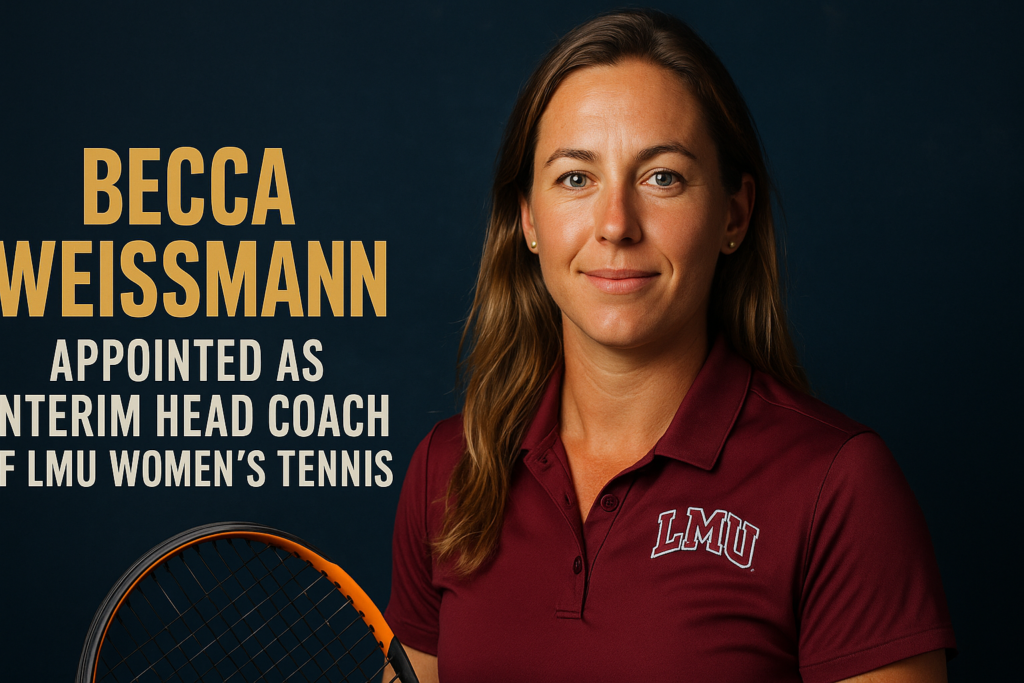
Becca Weissmann steps in as LMU’s interim women’s tennis coach — here’s what actually changes Short version: LMU handed the keys to someone who already knows where the racquets are kept. Becca Weissmann, the program’s associate head coach, is the interim head coach of the Loyola Marymount women’s tennis team effective immediately, and it’s a move that screams “steady hands” rather than a full teardown. That matters, because the Lions aren’t rebuilding from scratch — they’re trying to keep momentum while a transition plays out. Why LMU’s choice is more continuity than upheaval This isn’t the sort of headline you get when a school fires the manager and brings in a complete philosophy reboot. LMU made a deliberate internal promotion. The school says Weissmann was chosen specifically for her leadership record and the continuity she offers during the transition (you can read the official LMU Athletics announcement here). That matters for two reasons. One: coaching changes, especially in college tennis, often mean players think about leaving. Promote from within and you reduce that jitteriness. Two: whoever’s calling the shots next season needs to know the roster and culture already — and Weissmann does. Weissmann’s résumé: not flashy, but persuasive She didn’t arrive yesterday. Weissmann joined LMU in 2021 as an assistant coach and was promoted to associate head coach before the 2025–26 season. That timeline is laid out in LMU’s reporting on her promotion and earlier staff updates (see the announcement of her elevation here and the formal interim appointment here). LMU credits her with helping the program to 64 wins — a 59% win rate — while she’s been on staff. That’s a tidy number that suggests steady performance rather than a lucky streak. Big moments she helped create Her first season in the program included a serious highlight: LMU reached the 2022 NCAA Tournament with an 18–4 record and even notched a top-five win over UCLA. That’s the kind of result that gives her credibility with players and the administration alike (LMU’s announcement covers those points). What Weissmann inherits — the practicalities Short answer: a roster that’s being built, a culture with roots, and no reported injury crisis. Roster moves LMU has already announced three newcomers for 2026–27: transfers Yelyzaveta Chainykova and Melis Mert, plus freshman Ilana Toro. Those are additions that suggest the program is actively reshaping its lineup heading into the next season (LMU’s roster update is here). That’s an important point: this isn’t a sudden mass exodus or a roster left barren by departures. The incoming pieces indicate an offensive, not defensive, roster strategy. Program identity and the coaching picture One thing to note: the LMU staff page still lists Agustín Moreno as head coach, which signals that Weissmann’s role is interim and likely related to a temporary transition rather than a permanent exit or a complete shift in identity (the program staff listing is available here). Moreno has been LMU’s head coach since June 28, 2015, giving the program a long-established coaching identity. So Weissmann is stepping into shoes shaped over much of the past decade, not starting from a blank slate. What the administration said — and why that matters LMU Athletic Director Jim Mariam framed the decision as a values call. He praised Weissmann’s relationships with players and her “commitment to the student-athlete experience” as key reasons she’s the right fit for this interim period. That’s from the official LMU announcement and it reads like a reassurance to players and recruits: the program isn’t abandoning its people or its priorities (you can read Mariam’s comments in the announcement here). Weissmann herself said she’s “extremely grateful and excited” for the opportunity. That’s exactly what you want to hear in these moments: a coach who’s positive, present, and focused on the team rather than their résumé. Why promoting from within can be the smarter short-term move College tennis isn’t the NFL. Roster turnover happens, but it’s not usually dramatic overnight—unless a program chooses to make it so. Internal promotions like this one buy time to evaluate, stabilize recruiting, and keep players from using a coaching change as an excuse to test the transfer portal. Continuity reduces panic among current players. It gives the administration time to run a deliberate coach search if they want a long-term change. It signals to recruits and transfers that the program values internal development. LMU’s official announcement explicitly frames Weissmann as a continuity choice, which makes sense given the recent roster moves and the absence of any public injury or scandal to force a hurried response. What we don’t know yet — and why being honest about that matters There are a few blank spaces that are worth calling out. No official injury report appears in the announcement or roster update, so there’s nothing public suggesting the team is battered by health issues. There’s no public, detailed timeline showing how long Weissmann will serve as interim head coach. The staff page still lists Moreno as head coach, implying this is a temporary arrangement rather than a confirmed permanent promotion. I couldn’t find a current, official schedule for the upcoming season in the sources provided, so I’m not naming upcoming match dates or opponents. The takeaway: this is a sensible internal move, but the long-term plan — whether Weissmann becomes the permanent head coach or the school opens a national search — hasn’t been publicly spelled out. Short-term priorities for Weissmann (what she’ll likely focus on) If I had to guess — and I’ll label it that, because the sources don’t list her to-do list — these are the practical areas she’ll need to lock down fast. Player buy-in: maintain trust and prevent transfer-portal chatter. Integrating the newcomers: make the most of Chainykova, Mert, and Toro joining the squad. Practice structure and continuity: preserve the systems that led to 64 wins while also adapting to personnel changes. Those are obvious, but important. The program’s recent success — including that 18–4 season and the win over a top-five opponent —
Alex Eala DC Open win marks Philippines’ first WTA title

Alex Eala did something huge — and it’s not just a one-off headline Alexandra “Alex” Eala went out in Washington, D.C., and rewrote the tennis history books for an entire country. She beat world No. 3 Jessica Pegula 4–6, 6–4, 6–0 to win the 2026 Mubadala DC Open — her first WTA Tour singles title and the first time a Filipino has ever lifted a WTA Tour singles trophy. That’s the sort of thing that makes people stop scrolling and start talking. (Yes, even your mate who only watches finals.) The match: messy weather, big momentum swings The final didn’t play out like a neat script. Pegula took the first set and led 4–3 in the second when heavy rain stopped play on Sunday, forcing a suspension to Monday. When they came back, the match had a totally different feel. From 4–6, 3–4 down, Eala ripped off nine straight games. The last set was a clinical 6–0 “bagel” in which she surrendered only eight points. It wasn’t fluke; it was full-on statement. The WTA’s report on the final captures that comeback as the moment Eala “completed” something bigger than a single match — it was the culmination of a week where she kept raising the stakes. WTA coverage has the play-by-play if you want the match minutiae. The rain delay — a test of calm Rain delays are awful if you’re ahead — and Pegula was ahead. They give the trailing player time to reset mentally and the leading player time to doubt. Eala used that break like a press reset button. She didn’t just come back hungrier; she came back smarter. The final stretch — how the “bagel” happened When play resumed, Eala shortened points, stepped inside the baseline, and attacked Pegula’s rhythm. Reports noted her “controlled aggressiveness,” with laced groundstrokes and directional changes that kept Pegula off balance. By the time the third set arrived, Eala had turned both the scoreboard and the momentum into an avalanche. How big is this win — on paper and in real life? Let’s put the trophy under a proper light. This was a WTA 500 event, and Pegula came in as the top seed and world No. 3. That’s not a casual scalp; it’s a headline-making upset. Eala had already been making waves — but finishing off a top-3 player in this way is a different tier. She also beat all three top seeds over the week, which isn’t something that happens accidentally. Sky Sports called her run a defining “rising star” week, and it’s clear why: this was peak, week-long form, not a single match heater. Sky Sports noted the quality of opponents she beat. Why the Philippines is celebrating — and rightly so Two things matter here: national firsts and the scale of the event. Eala is the first Filipino — man or woman — to win a WTA Tour singles title, and she’s the first Filipina to take a WTA 500 crown. That’s not just a flashy stat for the back pages; it changes how a country thinks about the sport. World Tennis Magazine used the phrase “tennis tsunami” to describe the ripple effect back home — and that’s about right. When an athlete becomes the first to cross a real barrier, it does more than fill a trophy cabinet. It alters pathways for funding, attention, and young players’ belief that they belong on the biggest stages. World Tennis Magazine’s piece lays out that idea well. Where Alex came from — a quick recap She’s young — born May 23, 2005 — but not suddenly. Eala’s been building toward moments like this for years. She was ITF junior world No. 2 and won the 2022 US Open girls’ singles, the first Filipino to win a junior Grand Slam. (That was the initial spark.) In September 2025 she won the WTA 125 Guadalajara Open, again making history as the first Filipino to win that level of event. She’s already shown multi-surface capability with titles on hard and grass — and she reached the Miami 2025 semifinals, which made her the first Filipino to reach a WTA 1000 semi and crack the Top 100. The WTA player profile lists those results and tracks her rise from juniors to the Tour. If you want the tidy career timeline, the WTA profile is the place to go. Ranking milestones Before Washington, Eala had already climbed into the elite group of players from smaller tennis nations making sustained noise. On March 16, 2026, she hit a career-high No. 29 in WTA singles — the highest ranking ever for a Filipino and the first time a Filipina cracked the top 30. That stat isn’t hyperbole; it’s historical record. (The WTA profile and public records note this milestone.) What this says about her game From the NYT’s coverage to the WTA write-ups, one phrase keeps popping up: “controlled aggressiveness.” That matters. She’s not just swinging for the fences. She changes direction, steps in on returns and forehands, and forces opponents to play on her terms. Against Pegula she mixed power with placement, and when it mattered she could shorten points and go for winners. The result was not just winning — it was finishing. There were earlier hints of this temperament. She’s taken out top-10 players before and had deep runs at big events. The DC Open showed she’s added the kind of tactical maturity and closing ability that separates good weeks from career weeks. What people are saying The WTA called this a “breakthrough complete,” noting the historic significance for the Philippines. Their report is a good summary of the tournament arc. The Athletic (via the New York Times athletic desk) focused on how her groundstrokes and ruthlessness produced that 6–0 closing set against a top-three opponent. Their analysis emphasizes the stylistic shift that won the match. Sky Sports and other outlets highlighted the narrative thread that Washington has a history of launching careers — Pegula won her first title here back in
Colin Tavares Joins ECU Women’s Tennis as Assistant Coach
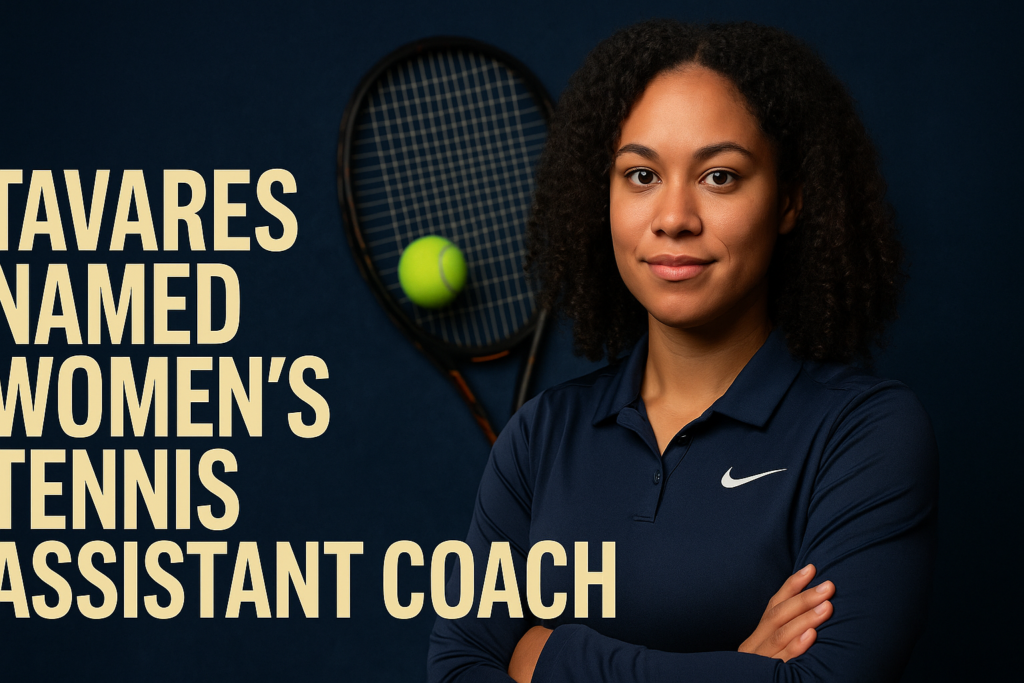
Colin Tavares Joins ECU Women’s Tennis: What That Actually Means Okay, quick catch‑up: East Carolina quietly dropped a small but interesting coaching move on August 3 — Colin Tavares has been named the new assistant coach for the Pirates’ women’s tennis program. It’s the kind of hire that doesn’t set off fireworks in the national press, but it could matter a lot for how ECU shapes its next season. The headline, plainly ECU’s official release announced Tavares as the assistant to sixth‑year head coach Kirstin Burgess. The note is short and factual: Tavares will help run daily training, prepare the team for matches, and take a lead on recruiting and player development. That’s standard language for an assistant coach, but it’s also a big handful. The announcement makes clear this is more of a staff add than a reboot — Burgess isn’t leaving, and this isn’t a clean‑slate type hire. It’s an upgrade around an established coach heading into the next campaign. Why the timing matters They announced it in early August, which is not accidental. ECU framed the hire as coming in “heading into the 2026–27 season.” That means Tavares will be in place for fall individual tournaments, preseason practices, and the build to the spring dual‑match grind in the American Athletic Conference. College tennis has a weird calendar: a busy fall of ITA events and individual tournaments to develop players and assess lineups, then the spring where team results matter most. Putting a new assistant in before the fall gives them time to meet recruits, start one‑on‑ones with players, and imprint their coaching style before matches start to count. What Tavares will likely be asked to do Short answer: the usual assistant toolbox, but with modern expectations. ECU’s release lists the role as daily training, match prep, recruiting and player development — that’s an all‑hands job. Daily training and match prep: drilling technique, running practice sessions, scouting opponents, setting match tactics. Player development: one‑on‑one development plans, fitness and movement work, mental coaching support. Recruiting: evaluating prospects, building relationships, and hopefully widening ECU’s recruiting reach. How that looks in practice depends on Tavares’s skill set, which ECU hasn’t published yet. The release confirms the hire and title but doesn’t include an extended résumé, prior coaching stops, or a playing bio. So we don’t know whether he’s coming with international tour experience, a strong recruiting Rolodex, or a specialty in doubles or analytics — at least not from the official announcement. For now, the safe read is: Burgess and the program trust him to handle a full assistant slate and help the team hit the ground running. How this fits a broader trend in women’s college tennis ECU’s move isn’t happening in a vacuum. This summer and early fall have seen a flurry of assistant hires across Division I programs. For context: USC hired Omar El Kheshen in late July. Cal brought in Jaan Kononov as an assistant around the same time. James Madison added Elena Tendero‑Ortiz. Iowa named Nikita Vishwase an assistant coach. Why so busy? Programs are trying to sharpen recruiting pipelines, bring new tactical ideas, and—frankly—keep up with peer schools who are adding specialists like analytics‑minded coaches or international‑circuit connectors. A recent piece about coaching in women’s tennis points out that assistants carry a heavy operational load and often are where new ideas actually take root — data work, individualized training plans, navigating personalities, and more. That’s not glamourous, but it’s essential work. The BBC’s reporting on coaching roles gives a good sense of that day‑to‑day reality. Assistants often carry a heavy load, and programs that staff smartly can squeeze extra wins out of otherwise even rosters. What ECU gets from adding an assistant now There are a few practical benefits for Burgess and the team by bolstering staff depth before the season: More attention per player. With a second coach to split the load, each athlete can get more one‑on‑one time and tailored practice plans. Recruiting bandwidth. Assistants are the ones on late calls with recruits, at tournaments watching prospects, and building the relationships that turn into signings. Tactical flexibility. Two coaches mean more eyes for match scouting and different coaching voices during tight situations. Again, the ECU release doesn’t spell out which of these areas Tavares will specialize in, but hiring now suggests the staff wants him involved in all those bits through the fall and into the spring. What we still don’t know — and why that matters There’s a fair bit missing from the public record. ECU’s announcement is succinct: it names the hire and his duties, but it doesn’t include an extended bio, previous stops, or quotes from Burgess or Tavares. That leaves several open questions: Where did Tavares coach or play previously? What recruiting territories does he cover? Does he bring a specialty (doubles, fitness, analytics, international recruiting)? Those are the details that actually tell you how transformative the hire could be. For example, a coach with international contacts and tour experience can suddenly open pipelines to a different talent pool. Conversely, an assistant who’s an outstanding recruiter in a particular region can shift the roster composition slowly but significantly. One cautionary detail the ECU release explicitly addresses: it doesn’t tie Colin Tavares to other Tavareses in the coaching world. There’s a well‑known Vanessa Tavares who was a decorated assistant at Texas A&M–Kingsville, but the ECU note doesn’t link the two — and it’s important not to conflate them without confirmation. The Vanessa bio is publicly available, but ECU has not provided any such résumé or family/career link for Colin. Vanessa Tavares has a distinct public record, which doesn’t appear in the ECU release — so until ECU clarifies, any relationship is speculation. What to watch next If you’re an ECU fan (or just curious), here are the things that will tell us whether this hire was a home run or a steady, useful upgrade: ECU publishes a coaching bio with past stops and specialties. We see Tavares actively on